

909.630.3943

Capacity & Resource Planning

Capacity & Workforce Planning ensures manufacturers and distributors have the labor, equipment, suppliers, and logistics capacity needed to support predictable revenue fulfillment, superior customer service, and profitable growth. Explore insights on capacity planning, workforce planning, labor scheduling, supplier capacity, production constraints, and SIOP (Sales Inventory Operations Planning). Learn how integrated planning, data, and technology improve resource utilization, increase throughput, reduce bottlenecks, and build resilient, scalable operations.

Labor Scheduling: Maximize Operational Performance & Serve Customers

At its simplest, labor scheduling is determining which people (and which skills) you should have at which sites at which work centers at what time (shift) to ensure the right products can be delivered to the right customer at the right time.

Managing Capacity in a Complex & Volatile Long-Lead Environment

Capacity planning is critical in complex and volatile environments. Lisa Anderson joined supply chain leaders to discuss how aligning people, equipment, suppliers and logistics capacity with demand can improve predictability, customer service and operational performance.

Managing Capacity in Complex, Volatile, Long-Lead Environment

Capacity planning is critical as manufacturers navigate volatile demand, extended lead times and supply chain disruptions. Learn how leaders are addressing capacity constraints through nearshoring, productivity improvements, workforce strategies, technology and rapid scaling.

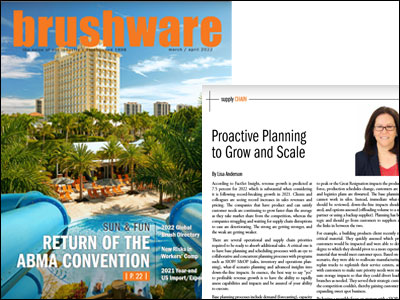
Zephyr Manufacturing: Proactive Planning to Grow and Scale

Proactive planning can help manufacturers prepare for growth even amid continued supply chain disruptions. Lisa Anderson discusses why capacity planning, what-if scenarios, and strong planning processes are essential to assess capabilities, support additional sales, and achieve profitable, scalable growth.

Proactive Planning to Grow & Scale

Rapid growth creates opportunities, but manufacturers need the capacity and planning capabilities to deliver. Strong demand, capacity, production, inventory, and materials planning — supported by SIOP and what-if scenario analysis — helps companies anticipate constraints, improve customer service, and scale profitably.

Capacity Planning Best Practices to Support Sales Growth

Capacity planning ensures your operations and supply chain can keep pace with sales growth. Learn capacity planning best practices for aligning labor, equipment, suppliers, warehousing, and transportation with demand to identify bottlenecks, improve customer service, and support profitable, scalable growth.

Sales Forecasts are Rising Fast. Do You Have Capacity?

Clients are growing quickly. No matter the industry and company size, clients and colleagues are seeing growth. The only question is how quickly and whether they can keep up. Capacity constraints are popping up everywhere. On the logistics front, Southern California has no available space; the ports are backlogged, prices are rising [...]

Ideas to Fill Peak Capacity Periods

As we toured several e-commerce facilities such as UPS and Amazon, it became obvious that the sheer volume during peak season presents a huge dilemma. For example, UPS goes from 250-300 containers per night to 450 during peak season. Now that is quite a surge! Amazon has similar surges and stated facts such as 68 million orders on Cyber Monday. 

The Resilient Supply Chain: What If You Sell More?

In thinking about the answer to the question, "What if you sell more?", most sales people would cheer. Most accountants would add up the additional revenue and profit.  And, often, the Operations resources would be glad the leaders are in a good mood.  But does anyone know if we are set up to successfully handle the increased sales if they occur?  

Go to Top