

909.630.3943

Global Trade, Geopolitics, & Import/ Export

Rebuilding Industrial Manufacturing in the U.S.

Tariffs, sweeping policy changes under the One Big Beautiful Bill, heightened geopolitical risk and the accelerating impact of artificial intelligence, is leading companies to rethink where and how they build their products and serve their customers. After decades of offshoring, fragile global supply chains and margin pressure, U.S. manufacturing, mining, and construction are entering a decisive new growth cycle.

Supply Chain Chokepoints in Goods Movement & the Path Forward

You are only as strong as your weakest link in your supply chain. This concept has come to fruition as a series of chokepoints have been impacted. Smart companies are utilizing common sense and artificial intelligence enabled advanced planning systems to predict disruptions, navigate around chokepoints, and proactively prepare for success.

Energy, Resources & Risk: What Supply Chains Must Navigate Next

In this episode of Supply Chain Chats, Lisa Anderson talks with international business attorney, John Tulac, about the current state of global energy and resources and the growing risks supply chain leaders must navigate.

Gulf War, Impacts & Strategies for the Supply Chain

Despite years of disruption and volatility, most organizations are still operating in a reactive mode—responding to issues rather than proactively shaping outcomes as recently highlighted in the Gulf war. In a recent episode of the Professionals of the Inland Empire podcast, Lisa Anderson discussed this gap and how to prepare for success.

Building Capabilities for Regional Supply Chain Independence

In this Supply Chain Byte, Lisa Anderson explains why manufacturers must focus on building capabilities for regional supply chain independence. We discuss how the conflict in the Middle East is highlighting the critical importance of regional supply chains and strategies for success.

What to Learn from the Iran War: Demand, Supply, Location & Flow

Although there are plenty of issues related to the War in Iran, from a supply chain perspective, the key issue is that the Strait of Hormuz has been blocked. This supply chain chokepoint is limiting the movement of energy. We discuss take aways related to demand, supply, flow and location.

Supply Chain Expert Lisa Anderson Explains How Iran Conflict Is Rippling Through Global Manufacturing

Lisa Anderson is highlighting vulnerabilities in global supply chains as the recent conflict involving Iran creates ripple effects across global trade, energy markets and critical manufacturing components.

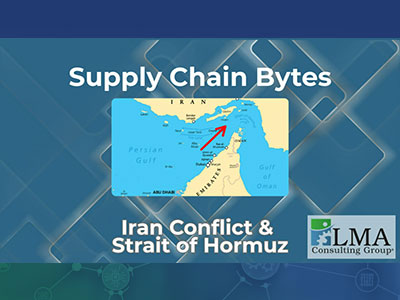
Iran Conflict & The Strait of Hormuz

In this Supply Chain Byte, Lisa Anderson explains why the Iran conflict and the Strait of Hormuz matter to manufacturers. As one of the most critical shipping chokepoints in the world, disruptions in this region can impact global trade, energy supply and transportation costs.

Iran Conflict – Impacting the Confectionery Sector

As the conflict disrupts key trade routes and energy supplies, the confectionery sector is among the first to feel the strain. How vulnerable are manufacturers, and what can be done to protect the industry? Lisa Anderson discusses supply chain protection and safeguarding supplies to ensure availability.

The War in Iran, Supply Chain Impacts & Actions

As with every war, there are immediate supply chain impacts, down-the-line impacts and related manufacturing and supply chain requirements. Companies must be prepared to pivot resiliently, scale, and plan to ensure customer and EBITDA success.

Go to Top