The Future of Critical Mineral Supply Chains
Lisa Anderson has been quoted by Edhat on the challenges facing U.S. defense supply chains as the country works to reduce dependence on China for critical minerals.



Lisa Anderson has been quoted by Edhat on the challenges facing U.S. defense supply chains as the country works to reduce dependence on China for critical minerals.
Critical minerals are becoming an even greater priority as the U.S. strengthens defense supply chains. New requirements emphasize multi-tier supplier visibility, supply continuity, capacity, and alternate sourcing to reduce risk and strengthen resilience.
Lisa Anderson has been featured in an article examining how the Strait of Hormuz crisis is disrupting global food supply chains. She explains why businesses need to look beyond their direct suppliers, strengthen supply chain visibility and prepare for the cascading effects of global disruptions.
Manufacturing is gaining momentum, creating significant opportunities for companies prepared to scale. Learn how to strengthen demand planning, assess end-to-end capacity, leverage technology strategically, and position your business for profitable growth.
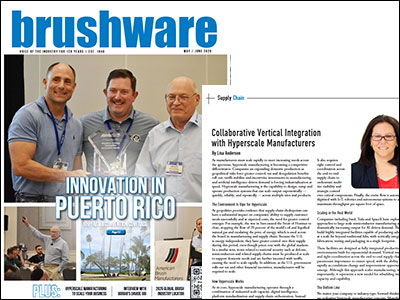
Manufacturers are under increasing pressure to scale production quickly as AI-driven demand, geopolitical risks, and domestic investment reshape the industrial landscape. Learn how hyperscale manufacturing combines automation, AI, advanced planning, and end-to-end supply chain orchestration to enable rapid, resilient, and cost-effective growth.
Tariffs have become a long-term reality for manufacturers and supply chain leaders. This briefing recaps the key trade policy milestones, explains where U.S. tariffs stand today, examines the latest developments with China, and outlines practical strategies to reduce risk, improve resilience, and position for profitable growth.
The U.S. semiconductor industry is rebuilding more than fabrication capacity. Learn why end-to-end supply chain resilience, strategic supplier partnerships, and SIOP are becoming competitive advantages as manufacturers strengthen networks to support AI growth and reduce supply chain risk.
Apple's latest U.S. manufacturing investment highlights a broader shift in supply chain strategy. Lisa Anderson explains why manufacturers are balancing resilience, risk, responsiveness, and profitability to build lasting competitive advantage in an increasingly uncertain global business environment.
Lisa Anderson and Patrick Daly discuss the U.S.–E.U. trade agreement, geopolitical risk, rightshoring, automation, and regional manufacturing strategies, offering practical insights into how global supply chains are evolving and what manufacturers and distributors should consider next.
Manufacturing leaders can no longer wait for disruption to pass. Learn how leading manufacturers are responding to tariffs, geopolitical risk, AI, labor shortages, and changing customer expectations by strengthening planning, building resilient supply chains, leveraging technology strategically, and investing in the people and capabilities that drive long-term profitable growth.