

909.630.3943

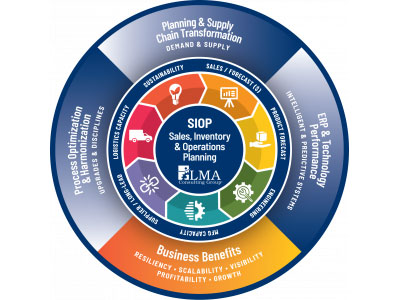
SIOP / Integrated Business Planning (IBP)

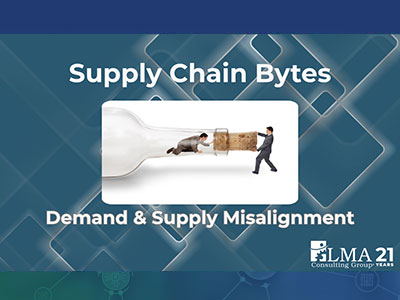
Demand & Supply Misalignment

In this Supply Chain Byte, Lisa Anderson discusses why manufacturers must align demand and supply at each step of the supply chain, using California’s oil and gas and refinery capacity challenges as an example of how reduced capacity can create ongoing pressure and an operational bottleneck.

Manufacturers Should Not Confuse AI Tools with Effective SIOP Processes

Lisa Anderson explains why AI cannot replace a formal SIOP process. While technology can improve analysis and decision-making, successful planning still requires strong business processes, cross-functional alignment, operational discipline, and organizational accountability.

The LMA Difference

When Armacell's OTIF performance fell to 38%, the company partnered with LMA Consulting Group to strengthen planning processes, optimize SAP capabilities, and improve cross-functional collaboration. Through SIOP improvements, data-driven decision-making, and sustainable process changes, Armacell increased OTIF performance to more than 90%, improved customer satisfaction, and built a stronger foundation for long-term growth.

Transformed Supply Chain Performance Through ERP and SIOP Excellence

When Armacell's OTIF performance fell to 38%, the company partnered with LMA Consulting Group to improve SAP utilization, strengthen SIOP processes, and align teams around data-driven decision-making. The result was a sustainable transformation that increased OTIF performance to as high as 92% and created a stronger foundation for long-term supply chain success.

From 38% to 92% OTIF: The Power of Visibility and Planning

Armacell partnered with LMA Consulting Group to improve customer service, strengthen SAP planning capabilities, and enhance SIOP execution. By transitioning from spreadsheet-driven planning to system-based processes, the company increased on-time service from 38% to 92% while building the internal capabilities needed to sustain long-term success.

Improved Service Levels Through Data-Driven Supply Chain Planning

Armacell partnered with LMA Consulting Group to improve customer service and supply chain performance across its manufacturing and distribution network. By leveraging data, improving ERP utilization, strengthening SIOP processes, and aligning teams across functions, the company increased service levels from approximately 40% to more than 85%, while building sustainable processes for long-term success.

How Armacell Used SIOP and Data to Fuel Growth

Armacell partnered with LMA Consulting Group to strengthen SIOP processes, improve capacity planning, and turn decades of ERP data into actionable business insights. By aligning sales forecasts, production planning, and customer demand, the company improved service levels, reduced lead times by more than 25%, increased customer satisfaction, and supported double-digit growth in key business segments.

How Schenck Built Predictable Growth Through SIOP

Schenck partnered with LMA Consulting Group to connect customer demand with operational execution through SIOP, CRM, CPQ, and SAP. The result was greater visibility and predictability across the business, enabling the company to double output in a critical manufacturing area, reduce inventory by 50%, grow more than 20%, and sustain customer service throughout the pandemic.

Improved Operations & Stabilized Operations with SIOP

Mission Rubber partnered with LMA Consulting Group to improve customer service, reduce seasonal disruptions, and create a more stable operation. Through SIOP, capacity planning, improved ERP utilization, and strategic inventory planning, the company improved service levels, stabilized its workforce, and strengthened operational performance throughout the year.

LMA Consulting Group Celebrates 21 Years

In this Supply Chain Byte, Lisa Anderson reflects on how supply chains have evolved - the move from spreadsheets to connected technologies, the Amazon Effect becoming an everyday customer expectation and the growing importance of predictability and planning in a world of uncertainty and global risk.

Go to Top