

909.630.3943

Risk & Resilience

Build resilient supply chains that can adapt to disruption while maintaining service, profitability, and operational performance. Explore strategies for strengthening supplier networks, improving supply continuity, managing risk, and increasing organizational agility in an increasingly complex global environment. Learn how manufacturers and distributors leverage Supply Chain Planning, Network Strategy & Optimization, and Supply Chain Technology & Enablement to improve visibility, enhance decision-making, reduce risk, and create resilient operations that support predictable, long-term growth.

Planning Beyond the Contingency

Traditional contingency plans are no longer enough as supply chain disruptions become increasingly unpredictable. Manufacturers need to build capacity, strengthen supplier capabilities, and develop flexible alternatives in advance to anticipate changing conditions, respond quickly, and maintain supply continuity.

Planning Beyond the Contingency: Supply Chain Expert Lisa Anderson Says One Backup Plan Is No Longer Enough

Supply chain volatility isn't going away, and a single backup plan is no longer enough. Manufacturers need visibility, capacity, capabilities, and multiple executable alternatives to anticipate changing conditions, adapt quickly, and maintain operations when disruptions occur.

Building Supply Chain Resilience in an Uncertain World

Critical minerals have become a strategic priority as geopolitical tensions, trade restrictions, and supply chain vulnerabilities increase. Manufacturers should look beyond tier one suppliers, understand critical materials in their products, diversify sourcing, and prepare for disruptions before they occur.

Vincent Thomas Bridge Closure

In this Supply Chain Byte, Lisa Anderson discusses why the 16-month closure matters for supply chains connected to the San Pedro Bay port complex. With fewer routing options and increased pressure on alternate routes, companies should not wait until the disruption begins to plan.

Protecting Against Supply Chain Disruptions

In this Supply Chain Byte, Lisa Anderson discusses how GM is investing in supply chain resilience through a $4.5 billion inventory and financing strategy designed to protect critical parts in its supply chain. The example shows that resilience requires more than extra inventory.

Critical Minerals for Defense Supply Chains

Critical minerals are becoming an even greater priority as the U.S. strengthens defense supply chains. New requirements emphasize multi-tier supplier visibility, supply continuity, capacity, and alternate sourcing to reduce risk and strengthen resilience.

Turning Product End-of-Life into a Competitive Advantage

Distributors have an opportunity to turn product end-of-life programs into a competitive advantage by supporting manufacturers with recycling and take-back initiatives. In Supply House Times, Lisa Anderson explains that the most successful programs balance excellent customer service with sound inventory and cost management.

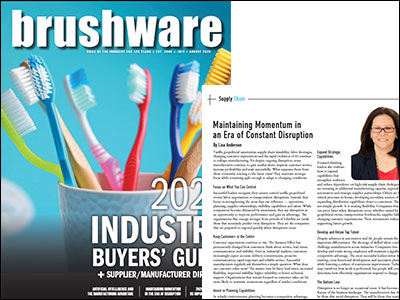
How Manufacturing Leaders Maintain Momentum in an Era of Constant Disruption

Manufacturing leaders can no longer wait for disruption to pass. Learn how leading manufacturers are responding to tariffs, geopolitical risk, AI, labor shortages, and changing customer expectations by strengthening planning, building resilient supply chains, leveraging technology strategically, and investing in the people and capabilities that drive long-term profitable growth.

The Impact of Fires

In this Supply Chain Byte, Lisa Anderson discusses two recent examples: a fire affecting a medical device distribution center and another involving a cold storage facility. Both highlight why manufacturers and distributors need more than a static plan.

Reshaping Supply Chains with Technology

Geopolitical uncertainty, supply chain disruptions, talent challenges, and rapidly evolving technologies are reshaping manufacturing and distribution. In this ASCM webinar, Lisa Anderson explores the trends influencing supply chain strategy and explains how resilient, proactive organizations can turn complexity into competitive advantage.

Go to Top