



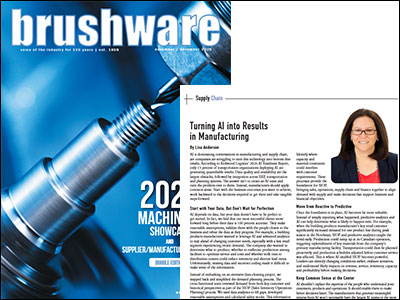
AI is dominating conversations in manufacturing and supply chain, yet companies are struggling to turn this technology into bottom-line results. According to Redwood Logistics’ 2026 AI Readiness Report, only 13 percent of transportation organizations deploying AI are generating quantifiable results. Data quality and availability are the largest obstacles, followed by integration across ERP, transportation and planning systems. The answer isn’t to create an AI team and turn the problem over to them. Instead, manufacturers should apply common sense. Start with the business outcomes you want to achieve, work backward to the decisions required to get there and take tangible steps forward.
Table of Contents
- Start with Your Data, But Don’t Wait for Perfection
- Strengthen the Planning Foundation
- Move from Reactive to Predictive
- Keep Common Sense at the Center
Start with Your Data, But Don’t Wait for Perfection
AI depends on data, but your data doesn’t have to be perfect to get started. In fact, we find that our most successful clients move forward long before their data is 100 percent accurate. They make reasonable assumptions, validate them with the people closest to the business and refine the data as they progress. For example, a building products manufacturer wanted to leverage AI and advanced analytics to stay ahead of changing customer needs, especially with a key retail segment experiencing erratic demand. The company also wanted to determine what to produce, whether to reallocate production among facilities to optimize service and costs and whether milk runs to distribution centers could reduce inventory and shorten lead times. Unfortunately, missing data and incorrect coding made it difficult to make sense of the information.
Instead of embarking on an extensive data-cleaning project, we stepped back and simplified the demand planning process. The cross-functional team reviewed demand from both key-customer and historical perspectives as part of the SIOP (Sales Inventory Operations Planning) process. We used data analytics to fill gaps, developed reasonable assumptions and calculated safety stocks. This information then fed the company’s master production scheduling (MPS) and distribution requirements planning (DRP) processes. The results were significant: service levels increased from below 50 percent to the low 90 percent range, lead times improved, freight costs decreased as standard lanes to distribution sites were established and the company increased revenue and profitability. The lesson? Don’t let imperfect data stop progress. Use the knowledge of your team along with analytics and AI to get the data directionally correct and continually improve it.
Strengthen the Planning Foundation
Data alone doesn’t produce results. Manufacturers need the planning processes to turn information into action. Develop a meaningful demand plan and translate demand into manufacturing, labor, equipment, supplier, transportation and inventory requirements.
Identify where capacity and material constraints could interfere with customer requirements. These processes provide the foundation for SIOP, bringing sales, operations, supply chain and finance together to align demand with supply and make decisions that support business and financial objectives.
Move from Reactive to Predictive
Once the foundation is in place, AI becomes far more valuable. Instead of simply reporting what happened, predictive analytics and AI can help determine what is likely to happen next. For example, when the building products manufacturer’s key retail customer significantly increased demand for one product line during peak season in the Northeast, SIOP and predictive analytics caught the trend early. Production could ramp up at its Canadian operation, triggering replenishment of key materials from the company’s primary manufacturing facility. Transportation could then be planned proactively and production schedules adjusted before customer service was affected. This is where AI-enabled SIOP becomes powerful. Leaders can identify changing conditions earlier, evaluate scenarios, and understand likely impacts on revenue, service, inventory, capacity and profitability before making decisions.
Keep Common Sense at the Center
AI shouldn’t replace the expertise of the people who understand your customers, products and operations. It should enable them to make better decisions faster. The manufacturers that generate meaningful returns from AI won’t necessarily have the largest AI teams or the most sophisticated technology. They will connect people, processes, data and technology around the decisions that matter.Start with common sense. Build the foundation. Then use AI to predict changing conditions, evaluate alternatives and accelerate better decisions. That’s how AI moves from an interesting technology to a practical tool for improving customer value, profitable growth and competitive advantage.
This article was published in Brushware Magazine. November-December 2026 edition.