How Jenson USA Improved Warehouse Performance and Reduced Costs
See how Jenson USA turned operational data into action to improve warehouse productivity, inventory visibility, and freight performance while building a scalable foundation for growth.



See how Jenson USA turned operational data into action to improve warehouse productivity, inventory visibility, and freight performance while building a scalable foundation for growth.
Digital twin technology is helping medical manufacturers improve product design, reduce development time and optimise production. In Medical Product Outsourcing, Lisa Anderson explains how combining digital twins with AI and real-time data is creating new opportunities for faster innovation and better decision-making.
Distributors have an opportunity to turn product end-of-life programs into a competitive advantage by supporting manufacturers with recycling and take-back initiatives. In Supply House Times, Lisa Anderson explains that the most successful programs balance excellent customer service with sound inventory and cost management.
AI and robotics can deliver dramatic results when combined. In this Supply Chain Byte, Lisa Anderson explores how advanced technologies can accelerate inspections, improve infrastructure visibility, address workforce gaps, and help manufacturers scale rapidly and profitably.
Manufacturers and distributors invest significant time and resources in forecasting demand, balancing supply with demand through SIOP (Sales, Inventory & Operations Planning), and developing supply chain strategies.
Nellson partnered with LMA Consulting Group to improve demand visibility and create more effective production plans. Through SIOP and longer-term planning, the company established a stronger operational rhythm, reduced inventory by 50%, improved OTIF performance into the high 90% range, and strengthened operational performance across the business.
LMA Consulting Group partnered with two aerospace manufacturers to improve inventory performance, strengthen business processes, and increase enterprise value. Through inventory optimization, operational improvements, ERP assessments, and post-acquisition support, the companies improved cash flow, enhanced operational performance, strengthened compliance, and positioned themselves for long-term success.
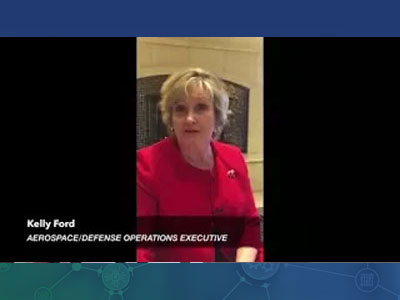
Over a decade, one aerospace operations executive relied on LMA Consulting Group at three different companies to solve operational challenges. Most recently, LMA helped an aerospace manufacturer improve on-time delivery by 20% and reduce past-due backlog by 50% through its first SIOP process and improved cross-functional alignment. The result was stronger performance and lasting organizational capabilities.
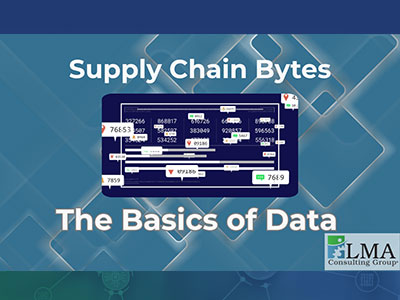
Artificial intelligence and advanced analytics can deliver powerful insights - but only if the data is right. In this Supply Chain Byte, Lisa Anderson explains why manufacturers must get back to the basics of data before relying on AI-driven decisions.
When inventory accuracy fell to 85% and confidence in cost accounting declined, the company partnered with LMA Consulting Group to assess and optimize its ERP system. By improving data integrity, redesigning processes, and enhancing system utilization, inventory accuracy increased to 99.8%, profitability visibility improved, and leadership gained the insights needed to make better business decisions.