Rethinking Manufacturing to Scale for Growth
Manufacturers are preparing to scale. Aerospace and defense companies need to rapidly increase production amid the Russia-Ukraine war, conflict with Iran, and the need to supply allies.



Manufacturers are preparing to scale. Aerospace and defense companies need to rapidly increase production amid the Russia-Ukraine war, conflict with Iran, and the need to supply allies.
AI and robotics can deliver dramatic results when combined. In this Supply Chain Byte, Lisa Anderson explores how advanced technologies can accelerate inspections, improve infrastructure visibility, address workforce gaps, and help manufacturers scale rapidly and profitably.
Manufacturers are under increasing pressure to scale production quickly as AI-driven demand, geopolitical risks, and domestic investment reshape the industrial landscape. Learn how hyperscale manufacturing combines automation, AI, advanced planning, and end-to-end supply chain orchestration to enable rapid, resilient, and cost-effective growth.
New research shows companies investing in AI are growing their workforces faster—not shrinking them. Learn why manufacturers should embrace AI today to improve forecasting, planning, productivity, and long-term competitive advantage.
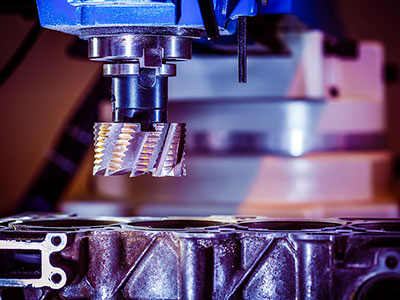
Advanced military manufacturing is rapidly becoming a cornerstone of national security and economic resilience. Manufacturing capability has become a strategic advantage — and advanced technologies such as AI, automation, robotics, 3D printing, and hyperscale digital manufacturing are reshaping the future of the defense industrial base.
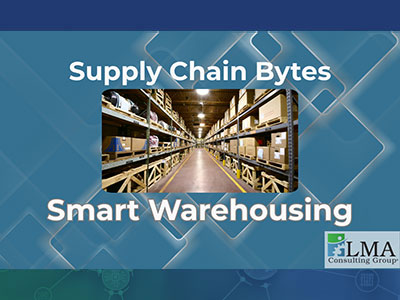
In this Supply Chain Byte, Lisa Anderson explains what defines smart warehousing today: optimizing pick velocity; leveraging automation, robotics and advanced technologies; and managing energy and electricity demands. These factors are critical to improving efficiency, controlling costs and supporting customer service as volumes grow.
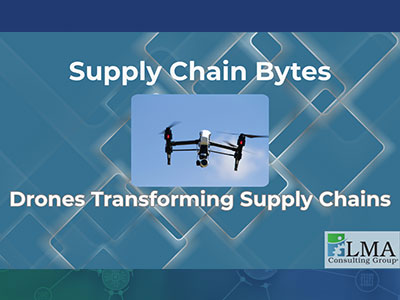
In this Supply Chain Byte, Lisa Anderson explains how manufacturers can leverage advancements in drone technology to respond more quickly and effectively to customer needs. From improving responsiveness to enabling new delivery and operational capabilities, drones are opening new possibilities across the supply chain.
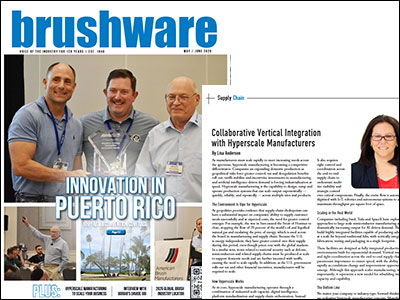
Hyperscale manufacturing is an emerging operating model that applies the speed, scalability, and modularity of tech companies to physical production. Hyperscale manufacturing has accelerated in importance as geopolitical risks, national security, and domestic requirements and capabilities have become of paramount importance.
U.S. labor productivity soared at a 4.9% rate in the most recent quarter as compared to the typical annualized rate of 2% during the current business cycle. We are seeing productivity gains across the board as manufacturers utilize predictive processes such as SIOP and advanced technologies such as AI, robotics, and the automation of processes and better utilization of ERP.
In this Supply Chain Byte, Lisa Anderson outlines three priorities for the year ahead. These priorities set the foundation for resilience, growth and sustained success in an increasingly complex environment.