Supply Chain Priorities for 2026
In this Supply Chain Byte, Lisa Anderson outlines three priorities for the year ahead. These priorities set the foundation for resilience, growth and sustained success in an increasingly complex environment.



In this Supply Chain Byte, Lisa Anderson outlines three priorities for the year ahead. These priorities set the foundation for resilience, growth and sustained success in an increasingly complex environment.
Medical products manufacturing is gaining momentum as companies want to build resilience to mitigate risk in the supply chain. Executives have realized that they must better control their end-to-end supply chain to ensure supply as geopolitical risks, vulnerabilities, and disruptions continue to arise while tariffs also push companies to build domestic capacity.
Priorities that power the triple bottom line of social, environmental and financial performance are gaining momentum. Sustainable advancements, smart manufacturing and advanced technologies such as artificial intelligence are trending as they can deliver win-win improvements, supporting profitable growth and success.
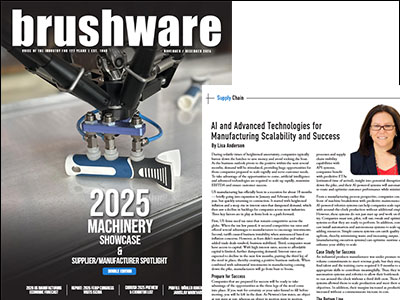
During volatile times of heightened uncertainty, companies typically batten down the hatches to save money and avoid rocking the boat. As the business outlook pivots to the positive, demand will be stimulated, providing huge opportunities for those companies prepared to scale rapidly with AI and advanced technologies and serve customer needs.
What's trending in manufacturing was highlighted at the Valve Manufacturers Association (VMA) Annual Meeting. From discussions on utilizing AI to what's trending in water, data centers, geopolitics, supply chain and foundries, we provide highlights, stats, and implications for the future of manufacturers and extended supply chains.
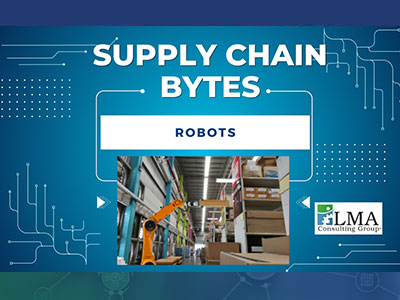
Robots aren’t just a futuristic concept—they’re already transforming how manufacturers and distributors stay competitive. In this Supply Chain Byte, Lisa Anderson uses the example of Amazon to explain how robotics are filling labor gaps, boosting productivity and enabling greater flexibility across supply chains.
Check out Lisa Anderson's new ebook, AI & Advanced Technologies in Manufacturing, how manufacturers and distributors can harness AI and advanced technologies to drive business performance, customer value, and bottom-line results.
Industrial automation is no longer optional—it’s the foundation for competitiveness and profitability. In this Supply Chain Byte, Lisa Anderson shares what manufacturers must consider when investing in automation to boost efficiency, improve responsiveness and stay ahead in a rapidly changing marketplace.
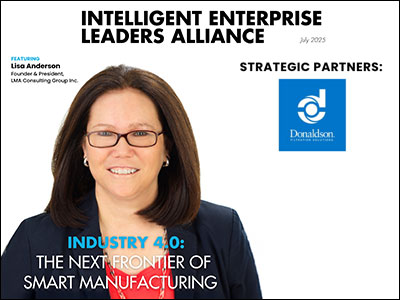
I was interviewed by the Intelligent Enterprise Leaders Alliance for their latest publication recently. Industry 4.0 is the next frontier of smart manufacturing. In the interview we discussed the smart way to embrace industry 4.0 with targeted, tactical, and transformative projects.
Distributors play a critical role in the supply chain in connecting manufacturers to customers with inventory, logistics, and fulfillment. As tariffs, geopolitical risks, and tax and regulatory changes take place, supply chains will evolve. Forward-thinking distributors are determining how to mitigate risks and take advantage of the opportunities that emerge with artificial intelligence and advanced technologies.