

Smart Planning
Planning is becoming more complex, but smarter planning makes the difference. In this Supply Chain Byte, Lisa Anderson outlines three key planning challenges manufacturers are facing today - and three ways to address them.
Supply chain transformations and upgrades require the improved use of ERP. There is no doubt about it - ERP is the backbone of supply chain performance. Clients come to us to improve performance (typically profitable growth, customer service, and cash flow), and the better utilization of ERP was a key part of 100% of these clients and was required to deliver bottom line results.
Companies are showing increasing interest in supply chain transformation as they want to create predictability, scalability, agility, and sustainable, profitable growth. We’ll talk through supply chain transformation, what’s included, how it relates to SIOP, ERP, and AI, and review a case study example.
The most successful companies are better utilizing ERP to automate processes, enhance customer value and better prioritize resources to support growth and scalability. Every company can better utilize their ERP system to drive bottom line results. Thus, we review top ways to better optimize ERP including a case study.
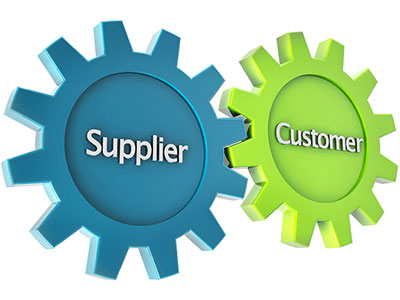
Taking your supplier / customer relationships to the next level of partnership is integral to supporting profitable growth with exceptional customer service and cash flow (ie. inventory turns) levels. Vendor managed inventory (VMI) can be integral to maximizing revenue/ service, profitability, and working capital.
As revenues remain volatile, disruptions plague supply chains, and interest rates remain high, executives' ability to build revenue, margin and working capital predictability and improvement takes on an elevated importance.
We live in a supply chain disrupted world, and there is no end in sight. It started with the pandemic as the global supply chain got out of alignment. The 'right' inventory wasn't in the 'right' place at the 'right' time to support basic needs let alone nice-to-have items. [...]
Manufacturers are experiencing continued inflationary pressures threatening customer service and profit margins with record-breaking price increases and lack of material availability. To add fuel to the fire, they are also starting to worry about preparing for a potential recession.
Every client wants to support growth goals while improving service levels (OTIF, on-time-in-full), operational efficiencies and inventory turns. These are timeless objectives for every planner. During the pandemic, the priorities shifted to service levels because clients struggled to keep up with dramatic increases in demand and extreme volatility.