



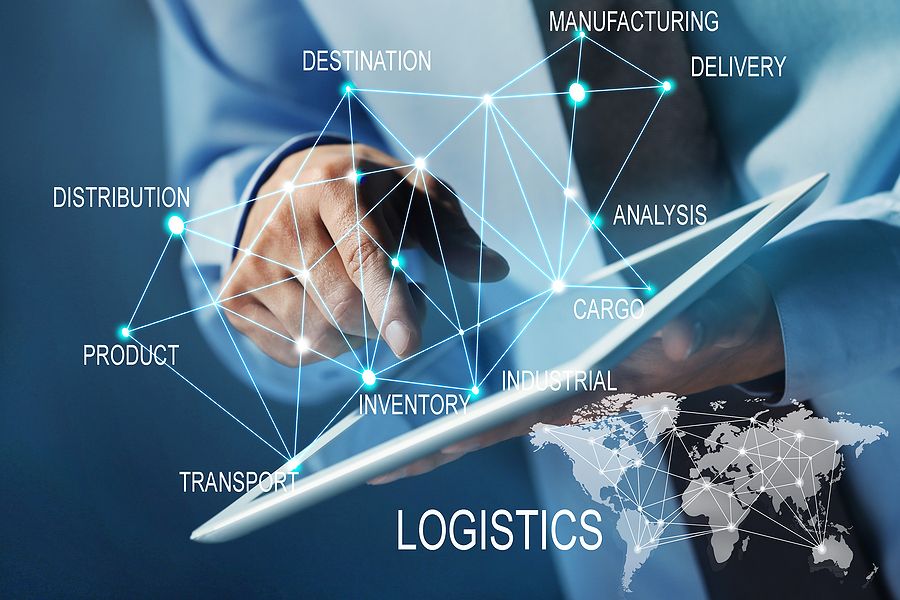
Logistics planning has become a strategic differentiator for manufacturers and distributors navigating today’s volatile supply chain environment. Rising customer expectations, shifting transportation networks, labor constraints, inventory pressures, and ongoing geopolitical disruption require companies to think far beyond simply moving products from point A to point B. The most successful organizations integrate transportation, warehousing, replenishment, network design, and fulfillment strategies into a coordinated planning process that improves service levels, reduces cost, strengthens resilience, and supports profitable growth. Companies that proactively align logistics planning with business strategy will be positioned to outperform competitors, respond faster to disruption, and scale effectively as market conditions evolve.
Table of Contents
- What is Logistics Planning?
- Today’s Logistics Planning Environment
- Replenishment & Inventory Positioning
- Warehouse & Fulfillment Strategy
- Transportation Network Strategy
- Technology-Enabled Logistics Planning
- Building a Resilient Logistics Planning Strategy
What is Logistics Planning?
Logistics planning coordinates transportation, warehousing, inventory positioning, replenishment, fulfillment, and network strategy to ensure products move efficiently through the supply chain. Effective logistics planning balances customer service, inventory investment, transportation costs, capacity constraints, and operational scalability to support profitable growth.
Key elements of logistics planning include:
- Network strategy and distribution strategy
- Inventory positioning and replenishment
- Warehouse and fulfillment operations
- Transportation planning and optimization
- Technology enablement and visibility
- Customer service and fulfillment performance
- Supply chain resiliency and scalability
Today’s Logistics Planning Environment
Logistics planning has become a strategic differentiator for manufacturers and distributors operating in an increasingly complex and volatile business environment. Rising customer expectations, transportation volatility, labor shortages, inventory pressures, and geopolitical disruption require companies to think far beyond simply moving products from point A to point B. Companies must position inventory strategically, optimize transportation flows, align warehouse capabilities with customer requirements, and respond quickly to changing market conditions while controlling costs and supporting profitable growth.
The most successful organizations take a proactive approach to logistics planning by integrating transportation, warehousing, replenishment, network strategy, fulfillment, and technology into a coordinated operational strategy. Using processes such as SIOP (Sales, Inventory & Operations Planning), advanced analytics, and cross-functional collaboration, these companies improve resilience, enhance customer service, reduce working capital requirements, and build scalable operations capable of supporting long-term growth.
As supply chains continue to evolve, logistics planning is no longer simply an operational necessity. It is a critical capability for improving fulfillment predictability, strengthening customer relationships, and creating a competitive advantage.
Network Strategy & Distribution Planning
A strong logistics strategy starts with the design of your supply chain network. Companies must determine how many distribution centers or warehouses they require, where those facilities should be located, and how inventory should flow through the network to support customer requirements at the lowest total cost. These decisions directly impact transportation costs, lead times, inventory investment, scalability, and customer service performance.
Organizations that utilize a formal SIOP process (Sales, Inventory & Operations Planning, also known as S&OP) are better equipped to make strategic network decisions because they align demand, supply, operations, and financial objectives into a coordinated planning process. Although plans often fail in execution rather than formulation, an improperly positioned network creates structural disadvantages that operational execution alone cannot overcome. If inventory is not located close enough to customers or transportation lanes are inefficient, service performance and profitability will suffer.
Many organizations are also reevaluating network strategies due to regionalization, reshoring initiatives, transportation volatility, and changing customer fulfillment expectations. Flexible and resilient network designs allow companies to adapt more quickly to disruption while improving service performance and reducing supply chain risk.
Replenishment & Inventory Positioning
Beyond network design, one of the most critical components of logistics planning is ensuring the “right” inventory is positioned in the “right” place at the “right” time while balancing customer service, lead times, transportation costs, and working capital requirements. Companies that proactively optimize replenishment strategies are better positioned to improve fulfillment performance while minimizing excess inventory and unnecessary logistics costs.
Replenishment planning, distribution planning, and vendor managed inventory (VMI) strategies help organizations align inventory deployment with customer demand patterns and operational capabilities. These processes become increasingly important as companies expand product offerings, add fulfillment channels, shorten delivery windows, and manage more complex supply chain networks.
For example, organizations supporting both e-commerce fulfillment and traditional pallet or case shipping often require different replenishment strategies, warehouse layouts, inventory positioning models, and fulfillment processes. Many successful companies separate these operations physically or operationally to improve efficiency, reduce congestion, and better support customer expectations. Similarly, bulky products, high-velocity SKUs, and specialized inventory categories often require unique replenishment and storage strategies to optimize service and cost performance.
Effective replenishment and inventory positioning strategies improve customer service levels, increase inventory turns, reduce storage and transportation costs, and create a more agile and scalable supply chain operation.
Warehouse & Fulfillment Strategy
Once network and replenishment strategies are established, warehouse and fulfillment operations must be designed to support efficient execution. Warehouse strategy should align with customer requirements, inventory positioning plans, product characteristics, fulfillment channels, labor availability, and long-term growth objectives.
Understanding warehouse storage requirements as part of the SIOP process allows organizations to make informed decisions regarding facility size, storage methods, automation investments, labor requirements, and overall warehouse infrastructure. Similar to calculating labor requirements for a manufacturing work center, companies should evaluate pallet positions, cubic feet, bin storage capacity, throughput requirements, and fulfillment volumes to determine the most effective warehouse design.
These analyses help companies determine the appropriate combination of racking systems, material handling equipment, warehouse management technology, automation capabilities, and labor strategies required to maximize storage utilization and operational efficiency while maintaining customer service expectations.
In some situations, organizations may determine that outsourcing a portion of logistics operations to a third-party logistics provider (3PL) provides strategic advantages. As with most supply chain decisions, the appropriate approach depends on the company’s network design, customer requirements, operational capabilities, growth plans, and cost structure.
For example, in working with a value-add distributor evaluating whether to continue operating its warehouse internally or transition to a 3PL, the internal operation initially remained the best fit because the facility was efficient and located close to customers. However, several years later, rapid e-commerce growth, increasing fulfillment complexity, and warehouse space limitations changed the equation. In that scenario, outsourcing e-commerce fulfillment allowed the company to improve delivery speed, position inventory closer to customers, leverage specialized fulfillment capabilities, and free internal capacity for core pallet-shipping operations.
Transportation Network Strategy
Once the transportation network is established, companies must determine the optimal transportation modes, routing strategies, and shipment structures required to balance service, cost, and operational flexibility. Transportation planning should align with overall network strategy, customer requirements, sourcing locations, and fulfillment expectations. Companies sourcing products globally will require different freight, port, and transportation strategies than organizations operating primarily within North America. Transportation options may include over-the-road trucking, LTL, dedicated fleets, rail, air freight, parcel shipping, and multi-stop truckloads depending on cost, service, and delivery requirements.
Transportation Mode Strategy
Most companies establish transportation mode strategies early in the network design process. Our most successful clients are reevaluating transportation strategy on a quarterly, semi-annual or annual basis as a part of the SIOP process, and they will make adjustments as required. In today’s rapidly evolving supply chain environment with continually changing networks and manufacturing points, the frequency should be increased to stay ahead of changing conditions.
For example, a building products manufacturer reevaluated replenishment to a distribution center and determined that a hybrid strategy of shipping over the road and by rail made sense to best support changing customer requirements with optimal inventory levels instead of shipping all by rail. Clearly, transportation costs would increase, but they would be offset by improved customer service, reduced inventory and storage requirements etc. Similarly, an equipment and tools manufacturer reevaluated international shipping strategies as they transitioned manufacturing from China to Vietnam and later to Mexico. In the first instance, the mode of transportation didn’t change, but the ports and routes changed. In the second, the mode of transportation changed. In both cases, once in North America, they used over the road and rail to replenish their network.
Transportation Optimization Strategies
Depending on your mode of shipment and network complexities, how you optimize transportation will vary widely. As an example, in a healthcare products manufacturer, they shipped partial loads relatively consistently to customers outside of the local region. Shipping LTL would be costly, require longer lead times, and proved unreliable. It made more sense to combine multiple customers on a truck and make 2-3 stops along a route. Thus, planning multiple stop truckloads provided the best service at the lowest cost. The transportation management system (TMS) would review customer orders within key routes and combine into multiple stop truckloads. It also would provide carrier options for review. The transportation planner would perform a similar role to a production planner or material planner to optimize transportation plans.
There are countless ways to optimize transportation. Because transportation networks involve numerous variables, organizations often have multiple opportunities to optimize service levels, transportation costs, inventory positioning, and fulfillment performance. You could also take a proactive stance by working with customers on their service policies to find win-win strategies to meet their needs while providing an advantage over your competition and minimizing cost. For example, an absorbent products manufacturer met with customers to provide additional demand data which allowed the company to optimize shipments to the customer yet providing improved service levels and reduced inventory levels with a collaborative replenishment (also known as vendor managed inventory or VMI) program. Additionally, they worked with key customers to use space in certain geographies to better serve customers and improve profit for both.
Technology-Enabled Logistics Planning
Modern logistics planning increasingly relies on integrated technologies to improve visibility, responsiveness, decision-making, and execution across the supply chain. As supply chains become more complex and customer expectations continue to rise, manufacturers and distributors must move beyond spreadsheets and disconnected systems to support scalable and predictable logistics operations.
ERP systems, warehouse management systems (WMS), transportation management systems (TMS), and advanced planning tools help organizations coordinate inventory positioning, transportation flows, warehouse execution, replenishment activities, and customer fulfillment requirements in real time. These technologies provide greater visibility into inventory levels, shipment status, warehouse capacity, transportation utilization, and customer demand patterns, allowing organizations to make faster and more informed decisions.
For example, transportation management systems can optimize routing, consolidate shipments, evaluate carrier options, and improve freight utilization while balancing service requirements and transportation costs. Warehouse management systems improve inventory accuracy, labor productivity, fulfillment execution, and storage utilization. Similarly, integrated ERP and planning systems support better alignment between demand forecasts, replenishment plans, transportation strategies, and operational execution.
AI-enabled tools, advanced analytics, automation, and scenario modeling technologies are helping organizations improve decision speed by rapidly evaluating transportation alternatives, inventory tradeoffs, network constraints, and potential supply chain disruptions in real time. These capabilities allow companies to identify trends, optimize inventory positioning, evaluate network alternatives, and proactively respond to changing conditions before they impact customers.
The most successful companies do not implement technology for technology’s sake alone. Instead, they align technology investments with operational strategy, customer requirements, scalability objectives, and business goals to improve fulfillment predictability, customer service, profitability, and long-term supply chain resilience.
Building a Resilient Logistics Planning Strategy
Logistics planning is no longer simply about moving products through the supply chain efficiently. It has become a strategic capability that directly impacts customer service, profitability, working capital, scalability, and long-term business performance. Companies that proactively align network design, replenishment strategies, warehouse operations, transportation planning, and technology enablement are far better positioned to respond to disruption, adapt to changing customer expectations, and support profitable growth.
The most successful manufacturers and distributors continually reevaluate their logistics strategies as market conditions, fulfillment requirements, transportation networks, and customer demands evolve. They understand that logistics planning is not a one-time initiative but an ongoing process requiring cross-functional collaboration, data-driven decision-making, operational discipline, and continuous improvement.
Organizations that invest in integrated logistics planning capabilities can improve fulfillment predictability, optimize inventory investment, reduce transportation and warehousing costs, strengthen resilience, and create a competitive advantage in increasingly complex supply chain environments. As volatility and complexity continue to reshape global supply chains, companies that take a proactive and strategic approach to logistics planning will be best positioned to outperform the competition and drive long-term success.
Did you like this article? Continue reading on this topic:
Improving Service Levels, Logistics Efficiencies, and Inventory Turns with Replenishment Planning Best Practices