


January 2007 - Issue #11


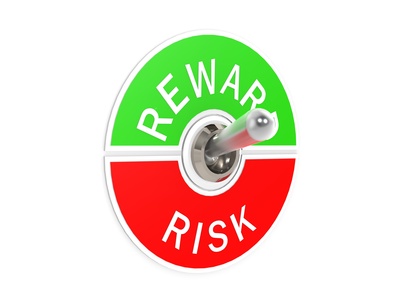
Why build your appetite for risk?

There are more and more stories in the news related to managing and mitigating risk. As companies go out of business, struggle to attain Sarbanes-Oxley compliance, etc, doesn't it seem a bit radical to recommend building an appetite for risk? Not if you build your appetite for risk, backed with solid decision-making skills. Instead, it will give you the potential to obtain significantly improved business results.

In the past month, I've worked with three significantly different projects - implementing Sarbanes-Oxley requirements, evaluating inventory model options that support changing sales requirements and evaluating a business. The key ingredient in each was risk. If the sole objective were to mitigate risk, none of the projects would yield satisfactory results. On the other hand, the opposite is also true.

So, why increase your appetite for risk? First, two points of clarification: Risk for the sake of risk makes no sense (it's a form of gambling). And risk that even blurs the lines of integrity is unacceptable. Aside from that foundation, building your appetite for risk makes sense if the risk correlates to an improved end result - a return on investment, improved condition for the people involved, etc. For example, in the evaluating a business example, you'd never purchase a business that contained zero risk because the cost would be prohibitive. Instead, the opposite is true - a business opportunity comes from risk. Typically, if there is no way to improve business results after purchasing a business (either through a turnaround or through innovation / raising of the bar), there is no incentive to buy a business (unless it is priced significantly below market). Yet, if there is an opportunity to improve business results, it is always accompanied with risk.

The key is to understand the risk, its probability of occurrence, potential seriousness of impacts, and evaluate it in relation to the expected returns. For example, in the inventory models example, a common approach to achieving an increased sales plan is to increase inventory in direct correlation to the sales increases. However, this assumes what is perceived to be a zero risk thought process (although it can actually be quite risky), which has significant cash flow impacts (for every dollar of inventory, it is one more dollar tied up that cannot be used for any other purpose). Instead, review inventory model options, associated risks, their probability, potential impact, ways to manage, tradeoffs, etc. This process will result in an improved business result - less cash tied up in inventory while supporting the sales plan - and, many times, with improved support to the sales plan.

Increasing your appetite for risk is not for the faint of heart - and requires persistence. Take a step back and think about the risk-reward options. If it makes sense, proceed. Gather data, ask questions, develop options (alternatives for your decision or project), and act. The rewards will be staggering.

Back to Top


Lisa's Tips: Personal Success Tips for the New Year

As the New Year begins, there is always talk about New Year's resolutions. I don't make New Year's resolutions; as I figure that if I determine I should change something, why wait? And, it is rather overwhelming to have 1000 things add up to begin on January 1st! So, instead, my goal is attainable for me - make them all year long, and in manageable chunks. I advocate a continual evaluation and refinement of your approaches to achieving success. I've found that it can make a significant difference to your level of success. So, to stimulate your ideas, here are a few tips for personal success:

  1. Know yourself: Be careful as to whom you accept advice from, even if they have 3 fancy titles and/or degrees behind their name. Do they know what works for you? Instead, listen to all advice and determine what makes sense for you. As my Organizational Development/ HR mentor said to me once, just because you receive advice / feedback, doesn't mean 100% of it is correct for you. "Say thank you. Use what makes sense and throw out the rest". It sounds obvious now, but it was profound advice. After all, who knows what will work for you better than you?
  2. Say "no": Limit your workload to what is achievable. I've found that aiming for what is a "stretch" yet achievable works best for me. If it is just a "sounds nice goal" yet I know it isn't achievable, it is de-motivating. What can be worse than setting you up for sure failure? And, actually, the same holds true for agreeing to a goal that is too easy - what motivation is there in that case? Who cares?
  3. Be upfront with people (including yourself): As hard as it sounds at first, be upfront with people. They will respect you. You will respect you. And, it is far less stressful (and involves significantly less wasted time) in the end. Again, my HR mentor was correct - it does get easier over time. And, it definitely results in far greater success.
  4. Prioritize: Stop wasting all your time on the unimportant, yet perhaps easy-to-do tasks. Focus on the priorities - the ones that will drive success and don't worry about the rest. You'll end up with twice as much time - and with double the results.
  5. Be persistent: As I'm fondly known as "the pit terrier", I know many of you will chuckle. There is a fine line between persistence and becoming a nuisance (as I continually learn); however, the majority of people give up just as they are about to achieve success. Try going one more centimeter when you are ready to give up and see what happens. I look forward to hearing the results!

Back to Top


Recommended Reading

"The Warren Buffett Way" by Robert G. Hagstrom - although this might seem like a book for investors, I found it to be a "must" for anyone interested in the fundamentals of achieving business success. Warren Buffett happened to achieve huge stock market success, but the principles and strategies he employed is what I found most interesting. As he says, what he does is not beyond anyone else's competence. It is common sense. This book provides insights into business, management, finance and value tenets that can be applied in any business or with any leader.

Back to Top

[ Consulting - Speaking - Coaching - Typical Client Results ]
[ Testimonials - Articles & Whitepapers - Newsletter - Home ]


© Copyright LMA Consulting Group, Inc. All rights reserved.