




Strategic Importance of Greenland
Greenland has been in the news as Trump has insisted that the U.S. should own it, and Denmark is not willing to give it up. Greenland sits strategically near emerging Arctic shipping routes like the Northwest Passage (NWP), which runs near its west coast, and the Transpolar Sea Route (TSR), crossing the central Arctic. These shorter routes between the Atlantic and Pacific have opened as ice melted, creating a critical chokepoint in the Arctic. Thus, heightening the importance similar to the South China Seas are to China. Greenland is also strategic to national defense due to its location. Finally, Greenland has substantial rare earth elements required to support artificial intelligence, electronics, and defense. When looking across these key topics, Greenland becomes strategic and of paramount importance in the global supply chain.
Supply Chain Chokepoint Implications
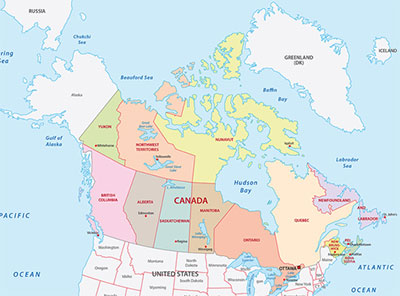
The NWP is a series of channels through the Canadian Arctic Archipelago, passing between Greenland and Canada (Davis Strait) and then west, shortening trips between Europe/Atlantic and Asia compared to the Panama Canal. Since the Panama Canal has had significant challenges with droughts, negatively impacting capacity by 50% and concerns about China owning the terminals on both sides as well as a key bridge, the Arctic route could become integral from a supply chain perspective. From the negative perspective, there are many issues from ice, weather, infrastructure, vessel limitations, geopolitical and regulatory issues (Canada’s position is that it runs through internal Canadian waters), insurance and risk.
The Transpolar Sea Route is a potential future Arctic shipping lane that would run straight across the central Arctic Ocean. Because it crosses the high seas of the Arctic Ocean, it avoids Russian and Canadian coastal control and would be the shortest Asia-Europe sea route. It bypasses supply chain chokepoints of the Suez Canal, Panama Canal and Russian-controlled coastal lanes. Because it lies largely in international waters, it mitigates the risks of countries imposing transit fees, restricting access, or using shipping as a geopolitical advantage. With that said, many barriers remain, mainly due to ice-related requirements (ice vessels, ice flows), infrastructure needs (ports, refueling, etc.), extreme altitudes (satellite and communications), and insurance risk.
Strategic Location for Defense
Greenland is also key to national defense. If you lay the map on its side, it becomes clear as to how it correlates to the security of the Americas to ensure that China and Russia are kept at bay. For example, China runs polar research programs, including expeditions, as part of its “Polar Silk Road” initiative to gain a foothold and understand Arctic dynamics. Russia maintains an extensive Arctic infrastructure and operates one of the world’s largest icebreaker fleets as part of strengthening its Northern Sea Route. It is not surprising that China and Russia have been aggressively pursuing this expansion as they would control a critical chokepoint to the Americas.
Trump has said that he wants to put up a Golden Dome, similar to Israel’s Golden Dome, as a part of its defense strategy. Israel’s Golden Dome refers to its layered air- and missile-defense shield because the idea is that Israel has a protective “dome” over the country. For the U.S. to have the same, Greenland is strategic. The shortest missile paths go over the artic, and Greenland sits directly under the polar trajectories from Russia and Asia. The positioning matters to tracking missiles sooner, and it allows for early warning which is more valuable than interception. From a system-design standpoint, Greenland is an upstream sensor node. Without strong Arctic sensing, any layered defense is blind in its most dangerous approach corridor. Since future systems will rely on space sensors, data fusion, and faster kill-chain decisions, additional ground stations are needed. Greenland provides a secure, high-latitude anchor point that links space-based sensing with continental U.S. defense systems. Hypersonic weapons make Greenland even more strategic as it makes forward Arctic sensing even more important.
Only As Strong As Your Weakest Link: Rare Earths/ Critical Minerals
Greenland has one of the largest undeveloped rare earth element (REE) deposits outside of China. Since rare earth minerals are required for electronics, artificial intelligence, infrastructure, defense, medical devices and many other critical items, gaining access to them is vital. China accounts for roughly 60–70% of global rare earth element mining output and processes 90% of the world’s rare earth minerals. They also virtually control 99% of heavy rare earths required for magnets and hold almost 50% of the world’s reserves. There is a significant risk as China cut off the world from rare earths during 2025, highlighting the elevated risk of relying on China for such a critical item. To learn more, refer to our article, “Only as Strong as Your Weakest Link in the Supply Chain: The Rare Earth Threat“
The Path Forward
Greenland is strategic to the Americas and to global supply chains. Whether the U.S. must gain access or own Greenland is the crux of the debate. The U.S. already operates in Greenland with Denmark’s consent. However, assured access, expansion and modernization rights are essential. The debate hinges on whether the U.S. will always have the ability to upgrade and scale Arctic defenses as threats evolve. From the rare earths perspective, the key question is whether rare earth elements can be mined and processed at scale to mitigate the threat from China’s control. Huge investments will be required. No matter what, Greenland will increase in importance to global supply chains due to the need for shipping routes to mitigate key chokepoints and the increasing need and heightened importance of rare earth critical minerals.
If you are interested in reading more on this topic:
Investing in Regional Supply Chains