


High-Skilled Talent a Must for Profitable Growth
There are significant opportunities for companies to grow as they expand manufacturing in the U.S. to mitigate risk in the global supply chain, support the significant rise in mining and commodity businesses to fuel electronics and artificial intelligence and take advantage of rising consumer sentiment, reduced tax rates, and the improving economy. Simultaneously, according to the Conference Board, the U.S. needs to add roughly 4.6 million workers annually just to keep labor force levels stable as baby boomers retire, which is around four times the historical rate. According to Rasmus Leichter research, 26% of the manufacturing workforce is age 55 or older. With the advent of artificial intelligence, low skilled roles will be automated; however, the demand for high-skilled talent will soar, leaving a talent gap. Successful companies will embrace high-skilled talent.
Client Examples Illustrate the Critical Importance
We forecast that focusing on developing high-skilled talent will be cornerstone to success. It is no longer as “easy” as hiring talent. You must retain and build talent. Countless client examples illustrate this critical priority. Often, these high-skilled resources are juggling lots of balls in the air that directly relate to customer and EBITDA success.
Planning Success
In a building products manufacturer, a high-skilled planner kept operations performing, customers served successfully, and systems updated for the rest of the organization. She made the process look easy. However, in reality, she knew when the manufacturing function that fed her department was running off track and tweaked schedules, when customer order dates were not maintained properly and so updated accordingly, when schedules had to be adjusted due to raw material issues, and when data integrity had to be addressed to ensure on-time delivery. If she retired without instilling these processes and upgrading the use of their system, all the balls would fall to the floor and customer and operational performance would suffer.
Filling Gaps to Keep Operations Running Smoothly
In an electronics custom manufacturer, a high-skilled resource knew how to keep operations running smoothly. Since the company split off from a larger company and was purchased, they went live with a new ERP system; however, it didn’t have the custom manufacturing and planning capabilities they were used to in a more robust ERP system. Thus, they did the best they could with the rollout and ended up relying on this high-skilled resource’s knowledge of products and processes to fill the gap. For example, she knew the sequence of operations and resorted paperwork to accommodate what was most effective. She also knew which products required a parent and child product and would ensure both requirements were accounted for and flowed through the shop in the correct sequence. She also knew which items required extra resources to produce and would account for them accordingly. If she retired before the company invested in upgrading the processes, documenting and incorporating her tribal knowledge into processes, and setting up the system to better support visibility and planning processes, the balls would come crashing down to the floor and customers would be impacted.
Technology Guru
In a healthcare products manufacturer, a high-skilled ERP expert and data analyst was invaluable in rolling out process upgrades. Because she had a unique ability to take into account not just system requirements but also best practice business processes and utilize business analytics, the business process owners relied on her to account for their needs without communicating them fully, and the IT department relied on her to translate system requirements into business requirements and vice versa. As this type of role requires a breadth of business and IT experience, the learning curve is lengthy yet the role is vital as better utilizing ERP, artificial intelligence and other advanced technologies to automate, improve efficiencies and better support customer needs. She also took into account down-the-line system impacts of business decisions to optimize business processes. Thus, if the appropriate education and transition plans were not put in place, not only would balls start dropping throughout the company but unintended negative consequences would start to pop up (shortages, expedite costs, etc.).
Engineering & Operational Prowess in Custom Manufacturing
In an equipment manufacturer, a high-skilled engineering resource accounted for multiple variables that were essential to keeping lead-times intact which was key to their growth and success. In conjunction with engineering, a high-skilled operational resource knew which levers to pull to serve customers, reallocate resources, and ensure plans were optimized. They had strong relationships with all departments which was essential to keeping bottlenecks addressed and orders flowing through multiple steps from quotes to order entry to design engineering to production engineering, to long lead-time planning, to customer coordination for approvals to multiple internal and external operational steps to delivery to the customer. As conditions changed, new products were launched, businesses were absorbed, and other changes occurred, these high-skilled resources resiliently adjusted plans and kept customers served profitably. If either resource left before his wide-ranging expertise could be replaced and processes instilled and ETO/CTO and ERP systems upgraded, all sorts of balls would fall and customers and profits would be negatively impacted.
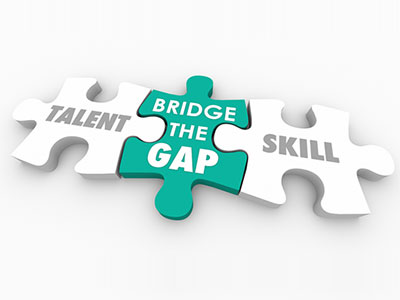
Bridging the Gap for High-Skilled Talent
Instead of letting balls drop, the most successful companies bridge the gap. First and foremost, they embrace and retain top talent. This must sound obvious; however, in over 20 years of consulting, 70% of clients do not fully appreciate these resources. If we look at non-clients, that number climbs to 80%+. These high-skilled resources make the job appear easy and are often focused on execution instead of communicating what they are doing up the chain. Even if they do communicate, most executives oversimplify what it takes to keep the function flowing as these resources are typically long-term employees and have consistently avoided pitfalls. Thus, take the time to fully understand what’s essential to delivering customer and EBITDA results. Find out what is meaningful to these high-skilled resources to ensure you retain them. Frequently, high-skilled resources appreciate challenges, recognition, executives listening to their ideas for improvement, practical and consistent feedback, and addressing poor performers surrounding them. The bottom line? Solid leadership skills.
In addition to retaining top talent, it has become essential to build talent. A few keys to success include:
- Upgrade processes & use of technology: Invest in consultants and experts to work with your stars to upgrade processes, better utilize ERP and related technologies and roll out additional tools to support repeatable and sustainable processes. To gain ideas on topics related to utilizing AI and advanced technologies, download our eBook, “How AI Powers Smart Supply Chains and Smarter Decisions.”
- Provide cross-functional training opportunities: High-skilled resources require a wide breadth of experience with the end-to-end view of business processes. Thus, cross-functional training can go a long way.
- Recognition and rewards: The selective use of rewards and recognition to encourage progress, learning and results often encourage the “right” behaviors.
- Provide educational and collaborative experiences: The best resources often enjoy attending a conference on best practices and trends with interactive sessions and giving them the opportunity to collaborate with the best of the best and enjoy time with colleagues and friends.
- Provide mentors/ mentees: Mentors can be invaluable to rising stars. At the same time, rising stars gaining the experience of mentoring other resources can be a great way to build skills and transition expertise.
- Training and education: Develop training sessions on topics from inventory accuracy to learning more and expanding ERP expertise to communicating effectively to learning about products, services and customers. Refer to our Supply Chain Byte on upskilling for additional insights.
Bridging the high-skilled talent gap is focused on leadership and common sense. Think about what would be valuable for your career and/or what types of programs you wish you had earlier in your career. Bring your team together and ask about their concerns, brainstorm ideas for what would provide value in bridging the gap, and think outside the box. Those that invest in and win the talent race will thrive for decades to come.
If you are interested in reading more on this topic:
Future Success Relies on Manufacturing and Supply Chain Talent