




The U.S. Storm Highlights Supply Chain Issues & Opportunities
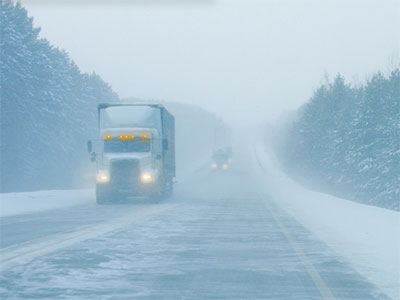
The storm that blanketed much of the U.S. with snow, ice, and cold weather is being compared with many of the worst blizzards over the years. Impacts are reverberating throughout the supply chain. Although companies must respond to these types of disruptions, artificial intelligence and advanced technologies can refocus efforts from reactive to proactive and improve the outcome for people and mitigate further supply chain disruptions.
Supply Chain Impacts from the Storm
The storm has had impacted the supply chain. Power was down for millions of people and businesses and supply chains have been impacted. Thousands of flights have been cancelled in addition to UPS, FedEx and other carriers, severely impacting the supply chain. Key freight corridors in the Southern Plains, Mid-South, Mid-Atlantic, and Northeast bore the brunt with interstate closures due to ice and downed power lines. According to Freight Waves, it has forced carriers to implement detours, surcharges, and reduced operations, exacerbating capacity constraints in dry van, refrigerated (reefer), and flatbed segments. Thus, it has extended higher rates from the peak season. There are also closures and limited service at distribution centers.
These types of issues cause ripple effects in the supply chain. For example, if truck is picking up at a distributor to move goods to another facility and cannot complete the route, the rest of that truck’s stops and next routes are delayed or must be reassigned. However, if the other potential trucks that could be reassigned are stuck on the interstate, waiting for a site to open or waiting on the prior link in the supply chain, chaos can ensue rapidly. In fact, the ripple effects can impact locations not related to the storm if the driver, flight, equipment, or priority is tied up elsewhere. Overall, there will be higher costs, longer lead times, potential stockouts, and manufacturers waiting on inputs. For example, in North Carolina, it is expected that Amazon packages will be delayed and the logistics system will be impacted.
Moving from Reactive to Proactive: AI & Advanced Technologies
Instead of running after the storm and resiliently responding to changing conditions and problems, there is an opportunity to better utilize supply chain technologies to move from reactive to proactive. Walmart provides an example of how artificial intelligence can reshape the winter storm supply chain by anticipating demand, repositioning products, and rerouting trucks before icy roads and blizzard conditions bring operations to a halt.
AI and advanced technologies will give you a leg up as expected disruptions pop up such as the winter storm. There are several technologies that can add value including advanced planning, crowdsourcing, supply chain visibility, TMS (transportation management system), and many more. For example, Walmart illustrates how using AI proactively can dramatically improve your position. To gain insights to additional opportunities to utilize AI and advanced technologies to power smart supply chains and smarter decisions, download our eBook.
Walmart Utilizing Advanced Technologies
Walmart uses advanced technologies to anticipate the impact days in advance. For example, they use AI tools to combine sales history, weather projections, and real-time data to understand how consumers will respond to severe weather conditions. Thus, they can feed these types of responses into their planning systems to determine which products to send, where to send them, and which routes are most likely to stay open. AI models are aligning forecasting, inventory allocation, and transportation planning around common scenarios.
In essence, Walmart is using AI with a SIOP (sales inventory operations planning) and advanced planning process. This allows them to predict where to position capacity and stage inventory in advance to get ahead of changing conditions to better align demand with supply. The AI models help identify which stores to prioritize for early shipments of key products and which alternative facilities can serve as backups as disruptions occur. Thus, planners have multiple options and what if capabilities incorporated into their process. To learn more about utilizing SIOP, download our eBook, “SIOP: Creating Predictable Revenue and EBITDA Growth“.
AI is also a natural fit to simulate and re-route trucks. Thus, Walmart uses these advanced planning systems (APS) to simulate alternative paths and reroute essential supplies when primary routes are are likely to close or be unsafe. These tools assess multiple variables simultaneously including road status, weather radar, carrier availability, historical performance during similar storms, and the urgency associated with each shipment. These types of systems enable planners to redirect loads to alternative distribution centers, stage inventory or utilize other strategies to ensure service remains intact and the supply chain stays in motion. In essence, proactive planning and dynamic rerouting enable the transformation from reactive to proactive.
If you are interested in reading more on this topic:
Investing in Regional Supply Chains