




The Iran War & Supply Chain Impacts
The war in Iran and the Middle East escalated quickly. The conflict escalated in late February 2026, when the United States and Israel launched coordinated airstrikes against Iran targeting nuclear facilities, military infrastructure, and senior leaders. As with every war, there are immediate supply chain impacts, down-the-line impacts and related manufacturing and supply chain requirements. Companies must be prepared to pivot resiliently, scale, and plan to ensure customer and EBITDA success.
Supply Chain Implications & Ripple Effects
The Iran War has resulted in several supply chain impacts. Key highlights include:
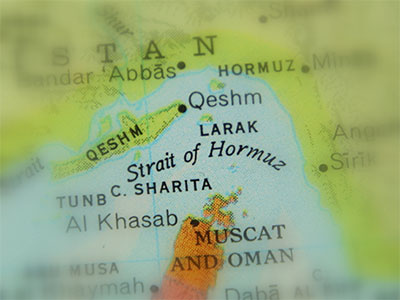
- Stait of Hormuz: The Strait of Hormuz is a strait between the Persian Gulf and the Gulf of Oman and the only sea passage from the Persian Gulf to the open ocean. Thus, it is one of the world’s most strategically important supply chain choke points. Twenty percent of the world’s oil and LNG pass through the Strait, making it vital to global energy and supply chains. In addition, refined petroleum products, propane and butane, bulk commodities, consumer goods, and food imports go through the Strait. Iran threatened to shut down the Strait of Hormuz, mainly connecting Asia, the Middle East and Europe.
- Energy: The region is a hotspot for energy which powers manufacturing and supply chains around the world. China purchases 80% of Iran’s sanctioned oil which equates to around 12-14% of their imports, and 40-50% of their imports flow through the Strait of Hormuz. Since energy is required to power manufacturing and logistics, and China dominates 30% of global manufacturing which impacts 80% of the world, these impacts have ripple effects in the supply chain. Since Qatar is one of the world’s largest LNG exporters, there are many ripple effects especially for China, India, Japan and South Korea. Japan has historically been the world’s largest importer of LNG. Thus, the price of energy is also impacted short-term due to risk and potentially long-term depending on what happens. Since energy is one of the most important costs in the supply chain, it could have far-reaching impacts.
- Defense manufacturing: As the U.S. and Israel use high-tech missiles and drones in the war, they will have to be replenished. This is in addition to the long-term war in Russia and Ukraine which has consumed significant supplies. Thus, Trump has been requesting that defense companies ramp up production of weapons and munitions. It will increase manufacturing and related supplies in these sectors.
- Infrastructure & Building Products: As buildings are destroyed in the war in countries throughout the Middle East, new infrastructure will need to ramp up after the war smoothes out, spurring demand for building and construction products in the region.
- Data Centers, Communications & Cyber: Drone strikes connected to the conflict damaged several Amazon Web Services (AWS) data centers in the Middle East, including facilities in the United Arab Emirates and Bahrain, thereby disrupting communications and advancements with AI. In addition, cyber operations and electronic warfare targeted Iran’s communications networks and impacted communications and sensor networks in addition to GPS and ship-tracking systems. These issues highlight critical vulnerabilities companies must prepare for and address.
- Rare earths: Since rare earths are essential to defense, electronics, artificial intelligence, and almost everything in today’s supply chain, the need will ramp up further for rare earths. Since China dominates rare earth production, ripple effects will be felt throughout the supply chain. The U.S. is the world’s largest producer of energy and is gaining dominance with Venezuela (the world’s largest reserves) and has key relationships with friendly partners including the Middle East vs China’s dominance with rare earths. China is losing key trading partners for below market priced oil with Venezuela and Iran. They are also heavily reliant on Russia (around 20% of imports). To walk this tightrope, the U.S. has put together several trading agreements related to rare earths and is investing heavily but is far behind China.
Since the largest near-term impact relates to energy and the Strait of Hormuz, the U.S. jumped into the equation and offered to insure ships and secure safe passage of ships through the Strait of Hormuz. Energy production in Middle East countries and the flow of oil and LNG through the Strait of Hormuz will be monitored closely. Time will tell what this means but companies should remain resilient and prepared.
What Should Companies Do?
Forward-thinking executives are prepared, resilient and creative in dealing with these situations. For example, proactive companies are prioritizing the following:
- Common sense backup plans: If you don’t have a backup plan (not just in name only but one that you can execute) after surviving the pandemic, you have a problem. Jump on it!
- Diversify your source of supply: You must diversify your sources of supply not just by country but also by region and other factors.
- Create resiliency: Be prepared with alternate routes and modes of transportation. Of course, an alternate mode of transportation is a challenge with energy but there is more flexibility with other product lines. Also build a culture of resiliency no matter the disruption.
- Predictive demand & supply planning: Utilize SIOP to prepare and respond resiliently to changing demand and supply conditions in the optimal way for customer and margin success. To learn more download our eBook.
- Artificial intelligence & advanced technologies: Utilize AI and advanced technologies to rapidly respond, dynamically optimize routes, crowdsource disruptions, and enhance supply chain visibility. To learn more, download our eBook, How AI Powers Smart Supply Chains and Smarter Decisions.
Since you are only as strong as the weakest link in your supply chain, the best companies are paying close attention and prioritizing their supply chain. Are you?
If you are interested in reading more on this topic:
Resilience in Supply Chain of Paramount Importance