



Supply Chain Chokepoint Impacted by the War in Iran
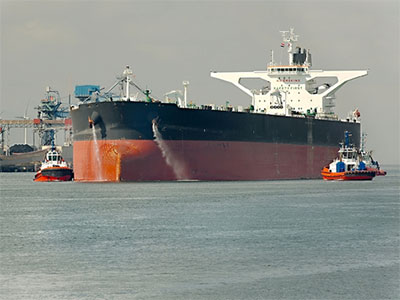
Although there are plenty of issues related to the War in Iran including the loss of life, from a supply chain perspective, the key issue is that the Strait of Hormuz has been blocked. Iran is threatening to attack any ship that tries to go through this critical chokepoint, thereby impacting 20% of the world’s energy supply. North America is self-reliant and an energy exporter; however, Europe and Asia are strongly impacted in terms of supply of oil and liquified natural gas. Since oil is a global market, it cascades to the entire world in terms of energy prices, soaring around 40% since the war started.
Demand, Supply, Location & Flow
Let’s deep dive into additional details and impacts to the supply chain.
- Demand: Demand remains high for oil and LNG as energy supports everyday life, manufacturing, logistics, goods movement, materials, green energy production, and much more. In addition to these standard demand inputs, since the advent of artificial intelligence, the demand for energy has grown dramatically. Thus, demand remains robust and is growing.
- Supply: Since Iran-backed proxies have gone to war with Israel, attacked ships in the Suez Canal, and initiated daily rocket, drone, and mortar attacks, the U.S. sanctioned Iran’s oil. Iran has continued to produce oil and sells it at a steep discount to China (around 90%). Thus, overall supply has remained largely the same, thereby keeping demand and supply in alignment with the cost declining as the globe brought on additional energy production and supply. Although the war in Iran impacted Iran’s production, it hasn’t significantly impacted the world’s supply.
- Flow: As a part of the war, Iran blocked the Strait of Hormuz, thereby stopping the flow of 20% of the world’s oil. It can be re-routed and/or shipped from other locations; however, these solutions are not easy, take time and add cost. For example, Saudi Arabia can transport oil, bypassing the Strait of Hormuz, using the East-West Pipeline (Petroline), which carries crude to the Red Sea port of Yanbu; however, this alternative does not have a the same level of capacity. Iraq and Kuwait cannot access these pipelines. LNG does not have an alternative. Thus, although energy is available, it has stopped flowing, thereby limiting capacity.
- Location: As is essential across the supply chain, if product is not in the “right” location at the “right” time, supply chains break down. You are only as strong as the weakest link in your supply chain. Thus, any company or country dependent on a single chokepoint is taking on far too much risk.
Because flow was stopped and therefore oil and LNG did not get to the “right” location at the “right” time, prices escalated rapidly. In addition, if supply could not be shipped, countries and companies will have to dial down supply to what they can store, use, and transport, thereby reducing overall supply. For these reasons, the U.S. is trying to destroy Iran’s capabilities of attacking ships in the Strait of Hormuz. As they deplete the capabilities, they are evaluating offering insurance to ships to pass through the Strait and taking responsibility to ensure safe passage of ships through the Strait to open supply and realign demand with supply to bring prices down.
What to Learn from this situation?
Forward-thinking executives are rolling out predictive, AI-enabled processes such as SIOP (Sales Inventory Operations Planning) in combination with AI-fueled advanced planning, transportation planning and related supply chain visibility systems to dynamically assess, re-route incoming and outgoing movements, and optimize service, cost and risk. These processes and systems enable companies to be agile and pivot with changing conditions, predict and prepare for customer needs and supplier limitations, mitigate risks and maximize margins. To learn how to best utilize SIOP to navigate these types of situations, download our eBook, SIOP: Creating Predictable Revenue and EBITDA Growth.
For example, an industrial manufacturer had to rapidly assess a key commodity that was negatively impacted by the war in Russia and Ukraine. They utilized their SIOP process to review their sales forecasts by core product groups with key attributes requiring the key commodity. These material forecasts were turned into purchase contracts to secure supply of their critical commodity. In addition, they utilized their SIOP forecasts and related capacity analyses to reallocate production, and find additional sources of supply that would best support needs in the “right” locations while redesigning products to accommodate these new sources of supply successfully and incorporate pricing nuances into their models. Thus, they were able to scale successfully and meet growth goals while keeping margins intact.
Successful companies will think about efficiency, resiliency, scalability, customer serviceability, and creativity simultaneously. The best will ensure they proactively mitigate the weakest link in their supply chain while building a robust, resilient, and reliable execution system that delivers customer value and bottom line results. Ensure your customers know which path you plan to take. No one succeeds by waiting to follow during times of volatility, uncertainty, complexity and ambiguity. Instead, lead by simplifying and forging the path forward.
If you are interested in reading more on this topic:
Resilience in Supply Chain of Paramount Importance