



The Goods Movement Sector: Chokepoints & Impacts
You are only as strong as your weakest link in your supply chain. This phrase has proven to be quite relevant as a series of chokepoints have experienced closure, reduced capacity and/or risk the last few years. From Houthi rebels attacking ships in the Suez Canal to a drought causing reduced capacity in the Panama Canal and the drama surrounding the closure of the Strait of Hormuz with the war in the Gulf, countries and companies must pay attention and proactively plan for likely chokepoint disruptions. Smart companies are utilizing common sense and artificial intelligence enabled advanced planning systems to predict disruptions, navigate around chokepoints, and proactively prepare for success.
The Strait of Hormuz Chokepoint & Implications
The U.S. has started to clear the mines to secure safe passage of energy tankers through the Strait of Hormuz. Since the Strait impacts 20% of global energy (oil and LNG), if you are dependent on this chokepoint, you might have to curtail production, stations might run out of gas, etc. Even if you are not directly related, you will be impacted due to the global nature of the price of oil which is used in making and transporting everything. Proactive companies plan for likely risks and have a series of backup plans.
For example, since the U.S. is energy independent, it is not experiencing shortages. In fact, there are a large volume of empty tankers heading to the U.S. to receive oil and LNG since they cannot get through the Strait of Hormuz. Japan, South Korea, and several other Asian countries rely on the Strait and are actively seeking to purchase additional supply from the U.S. On the other hand, Europe relies on the Strait for 11% of its oil and a small portion of its LNG; however, the attacks on Qatari infrastructure reduced capacity, thereby putting demand and supply out of alignment. In Ireland, they are heavily dependent on imports, and so there are severe protests over the cost of fuel, and there are shortages of fuel throughout parts of the country.
In addition, although 20 million barrels of oil and petroleum products passed through the Strait before the conflict, a few backup plans have come to fruition. Saudi Arabia has turned up their pipeline to full capacity of 7 million barrels of oil to the Red Sea, avoiding the Strait of Hormuz. The UAE Habshan-Fujairah Pipeline can transport up to 2 million barrels per day. There is also an Iraq to Turkey pipeline; however, it has minimal volume due to repairs. There are several proposals for a web of pipelines to connect the Gulf States and expand this capability to minimize the risks associated with the Strait of Hormuz.
Key Supply Chain Chokepoints
There are several chokepoints around the globe.Since the world has gone global in manufacturing with the bulk occuring in China, there are significant chokepoints popping up that can impact the flow of goods. If you are dependent on materials, components, or finished goods traversing the globe, you must pay attention.
- Strait of Hormuz: This chokepoint hardly requires detail anymore since the price of oil escalated with the closure of the Strait. Beyond the price, the war in the Gulf has caused countires and companies to reevaluate their end-to-end supply chain dependencies. Since energy is a vital input to manufacturing, logistics, artificial intelligence and the data center buildout, as well as basic necessities, it makes sense to ensure you have secure supply. It is likely that proactive countries and companies will change purchase patterns, revise the flow of goods, etc.
- The Panama Canal: The Panama Canal is a vital maritime chokepoint connecting the Atlantic and Pacific Oceans, handling approximately 5% of global maritime trade and 40% of U.S. container traffic. Concerns exist over Chinese influence due to Hong Kong-based companies operating port facilities at both ends of the canal. If the war in Iran proves anything, it is that you must secure transport of goods, energy, and military vessels. As of April 2026, the Panamanian government has taken control of two major container terminals at the Panama Canal following a Supreme Court ruling that annulled the contract of the previous operator, Panama Ports Company (PPC), a subsidiary of Hong Kong-based CK Hutchison. Until this is secure, it is of paramount importance to pay attention.
- Suez Canal: The Suez Canal is a 120-mile artificial sea-level waterway in Egypt connecting the Mediterranean Sea to the Red Sea, acting as the fastest maritime route between Europe and Asia. During the attacks on Israel, Iran-backed Houthi rebels attacked ships in the Suez Canal. Thus, traffic went down to near-zero and remains severely depressed, down roughly 60% in early 2026 compared to 2023 levels. Ships will find less risk-prone options such as around the soutern tip of Africa and through the Panama Canal.
- Strait of Malacca: The shortest shipping route between East Asia and the Middle East, carrying approximately 23.7% of global seaborne trade and roughly 80% of China’s oil imports. With the security threats in the Red Sea, the Strait has increased, causing increased congestion. There has been an increase in piracy in this Strait, thereby causing a greater need to secure supply chains.
- South China Seas: Although this hasn’t popped to the top of chokepoint lists, if you review your end-to-end supply chain, it is undoubted true that you are dependent on China for manufacturing. Thus, the South China Seas can cause substantial havoc in the global supply chain. The South China Sea serves as a vital artery connecting the Indian and Pacific Oceans. Over half of the world’s annual merchant tonnage passes through this region and its surrounding bottlenecks, such as the Strait of Malacca, making it essential for global trade, particularly for energy imports to China, Japan, and South Korea
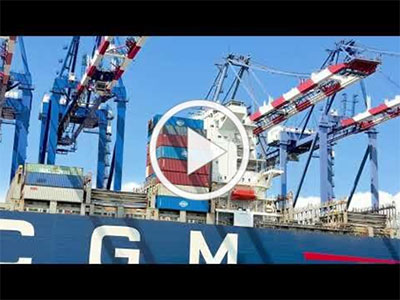
- A. and Long Beach Port Complex: As the largest maritime hub in the Western Hemisphere, this complex handles approximately 40% of all containerized imports into the U.S. During the pandemic, it became a critical chokepoint and concern as ships waited in the oceans to dock and be unloaded. Check out the video from ASCM-IE on the L.A. port.
Path Forward to Ensure Success
The best companies are confronting reality – assessing risk, evaluating their end-to-end supply chain vulnerabilities, and likley scenarios that will impact their manufacturing and goods movement success. Readiness assessments and resiliency checks have become a must. The best utilize advanced tools to proactively manage demand and supply with SIOP (Sales Inventory Operations Planning) processes. This process will naturally highlight potential risks in your supply chain to fulfilling demand and predicting revenue. It will highlight reshoring and nearshoring opportunities, make vs buy decisions, vertical integration and strategic partnership opportunitiies, margin and mix shifts, and other alternatives.
AI-enabled advanced planning systems enhance supply chain visibility, predict disruptions, and optimize transportation routes, carriers, and/or networks. Digitial twins and IoT devices will provide a simulation of “what-if” scenarios, optimizing efficiency from design to operation. In addition, autonomous vehicles, robotics, and hyperscaler manufacturers can ensure scale and success with rapidly changing conditions. To learn more about AI for manufacturers and how to achieve smart supply chains, download our eBook.
If you are interested in reading more on this topic:
Resilience in Supply Chain of Paramount Importance