

909.630.3943

Geopolitics, Trade & Supply Chains

Navigate geopolitical uncertainty, trade policy changes, and global supply chain disruption with strategies that strengthen resilience, protect profitability, and support predictable growth. Discover how Supply Chain Planning, Operational Performance & Transformation, and Supply Chain Technology & Enablement help manufacturers and distributors improve supply continuity, respond faster to change, and build more agile, competitive supply chains.
Lisa Anderson, Manufacturing, SIOP Expert and President of LMA Consulting Gets Real About Supply Chains and World Events

Global events such as the Russia-Ukraine war continue to expose vulnerabilities across interconnected supply chains. Manufacturers can get ahead of disruption by strengthening supply chain resilience, reevaluating suppliers, reshoring and nearshoring operations, leveraging technology, and using S&OP to improve flexibility and control.
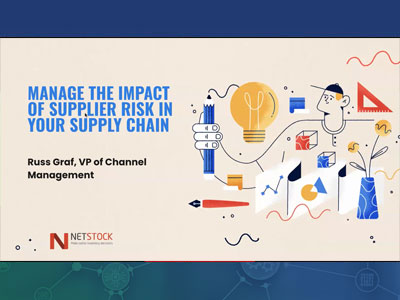
Manage the Impact of Supplier Risk in your Supply Chain

In this webinar, industry expert Lisa Anderson along with NETSTOCK's Russ Graff discuss their top insights on how businesses can improve their processes and reduce supplier risk to ensure they deliver what their customers need. 

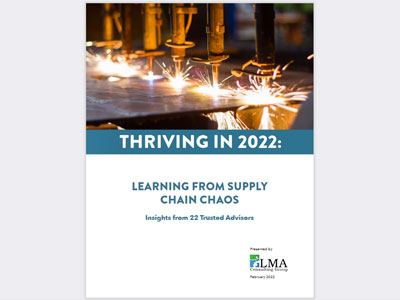
Applying Lessons Learned from Supply Chain Chaos to Thrive in 2022

Supply chain chaos exposed the risks of lengthy global supply chains and the need for greater resilience, responsiveness, and control. Manufacturers are rethinking where they produce and source, strengthening SIOP and planning capabilities, investing in technology, and moving manufacturing closer to customers to support profitable growth.

Disruptions, War, Inflation. 83% Reshoring/ Nearshoring

Manufacturers are accelerating reshoring and nearshoring as supply chain disruptions, geopolitical risk, and inflation expose the vulnerabilities of extended global supply chains. Learn how companies can evaluate reshoring, nearshoring, strategic partners, and SIOP to strengthen resiliency and better serve customers.

Overcoming Barriers to Growth in the Face of Supply Chain Disruption

Lively discussion with Lisa Anderson and David Ogilvie, my colleagues from the Society for the Advancement of Consulting (SAC) Supply Chain Special Interest Group about how companies can overcome the barriers to growth arising from supply chain disruptions.

Interview with Quality Digest on the Supply Chain Chaos

Global events and geopolitical conflicts continue to expose vulnerabilities across supply chains. Lisa Anderson discusses how manufacturers can respond to disruption by reevaluating suppliers, reshoring and nearshoring, optimizing inventory, leveraging advanced technologies, and proactively building greater supply chain resilience.

Do You Have Suppliers or Partners?

During supply chain disruptions and shortages, strategic partners are more likely to prioritize one another than transactional suppliers and customers. Learn how stronger supplier partnerships, active backup sources, collaborative planning, and becoming a customer of choice can improve supply continuity, strengthen resiliency, and support profitable growth.

More Inflation & Supply Chain Chaos – What Should We Do?

Rising inflation, geopolitical conflict, energy costs, and commodity shortages are creating additional supply chain volatility. Manufacturers should proactively evaluate customers, suppliers, inventory, capacity, and supply chain networks while strengthening SIOP and planning processes to navigate disruption and stay ahead of changing conditions.

News Nation: COVID-19 Protests Threaten Canada-US Border Trade

The U.S.-Canada border protests disrupted a critical trade corridor, threatening delays and supply chain impacts. Lisa Anderson discusses the potential consequences for manufacturers, transportation, and cross-border trade.

When Will the Supply Chain Disruptions End?

Supply chain disruptions aren't going away. Manufacturers that proactively strengthen resiliency, rethink supply networks, improve planning, and adapt to changing customer demand will be better positioned to thrive in the next normal.

Go to Top