

909.630.3943

SIOP / Integrated Business Planning (IBP)

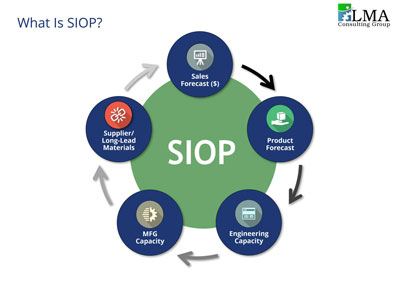
Sales Inventory Operations Planning (SIOP) provides the executive framework to align demand, supply, capacity, inventory, and financial objectives, enabling predictable revenue fulfillment, superior customer service, resilient operations, and profitable growth. Explore insights on executive SIOP leadership, cross-functional alignment, scenario planning, demand and supply balancing, integrated business planning, and decision-making. Learn how manufacturers and distributors leverage integrated planning, technology enablement, data, and analytics to improve visibility, resolve constraints, optimize working capital, and execute with confidence.
AWCI Construction Dimensions: Inflation Busters: Protecting Profits As Costs Rise

Lisa Anderson, manufacturing and supply chain expert and president of LMA Consulting Group states there are operational and supply chain priorities required to be ready to absorb additional sales". One of the most important components is to have planning and scheduling processes required to be ready to absorb capabilities.

Do You Need Software to be Successful with S&OP?

As clients become interested in S&OP (Sales & Operations Planning), also known as SIOP (Sales, Inventory, and Operations Planning) to get in front of customer requirements while simultaneously increasing margins and profits, executives want to know if software is required to support S&OP success.

Getting Ahead of Inflationary and Deflationary Pressures Using SIOP / S&OP

Because we live in a global, supply chain disrupted world amidst record-breaking prices for food, commodities and oil (and all products dependent on these industries), not only are businesses looking to navigate inflationary pressures, but also deflationary pressures. Inflation can lead to deflation as consumers panic and demand softens.

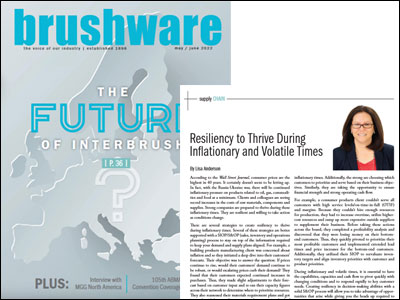
Resiliency to Thrive During Inflationary & Volatile Times

Inflation and supply chain volatility are putting increasing pressure on manufacturers to make faster, smarter decisions. Learn how resilient companies use SIOP to align demand, capacity, inventory, and profitability so they can adapt quickly, strengthen cash flow, and position themselves for long-term success.

Using SIOP to Navigate Global Disruptions

Global disruptions can quickly impact supply, costs, capacity, and customer service. By using SIOP to evaluate changing conditions, risks, inventory, capacity, and customer priorities, manufacturers can make proactive decisions, strengthen supply chain resilience, and position themselves to capture growth opportunities.

What Is S&OP (also known as SIOP) & Why Should We Care?

S&OP, also known as SIOP or Integrated Business Planning, connects strategy with execution by aligning demand, supply, inventory, capacity, and resources. A strong SIOP process helps companies improve collaboration, make better strategic decisions, and successfully navigate changing business conditions.

SIOP and S&OP FAQs: Implementation & Proven Results

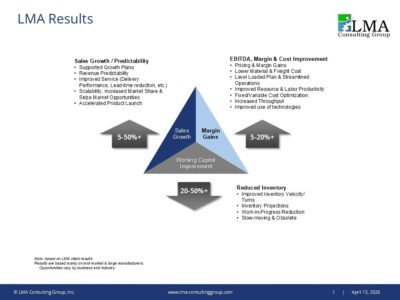
SIOP aligns sales, operations, supply chain, and finance around one plan to improve revenue predictability, customer service, inventory, and profitability. This Q&A explores how manufacturers can use SIOP to anticipate capacity and resource needs, improve operational performance, and support profitable growth.

Interview with Industrial Insights on How SIOP Can Address Business Volatility

Supply chain disruptions and demand volatility make it increasingly difficult to balance customer needs with capacity, inventory, and profitability. In this Industrial Insights interview, Lisa Anderson discusses how SIOP helps companies anticipate changing demand, align supply, manage inventory and working capital, and make faster decisions in a volatile business environment.

Thriving in an Inflationary Environment Using SIOP/ S&OP

Inflation puts pressure on pricing, costs, margins, inventory, and working capital. Learn how manufacturers can use SIOP to evaluate customer and product profitability, model what-if scenarios, align capacity and inventory with demand, and make proactive decisions that support profitable growth.

Improving Sales, Inventory & Operations Planning

In this Industrial Insights podcast interview, Lisa Anderson discusses Sales, Inventory & Operations Planning (SIOP), end-to-end supply chain management, demand planning, and the strategies manufacturers can use to improve service, profitability, and scalable growth.

Go to Top