FTC Cracking Down on Bogus ‘Made in USA’ Claims
The FTC is cracking down on bogus 'Made in America' claims. Lisa Anderson was quoted in Bloomberg Law on reshoring and near-shoring.



The FTC is cracking down on bogus 'Made in America' claims. Lisa Anderson was quoted in Bloomberg Law on reshoring and near-shoring.
If you are dependent on any region, non-friendly country, customer, supplier, material, or anything noteworthy to your success, you must diversify. Although this concept has always been true, the pandemic highlighted the critical importance. Some companies simply lost their source of supply overnight and have not recovered if not diversified.
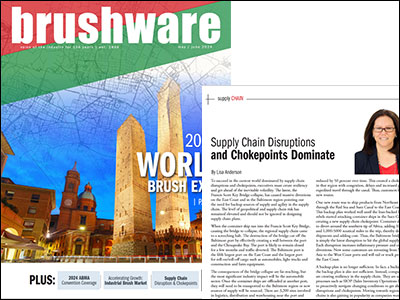
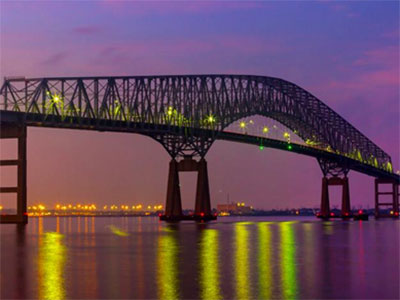
The latest Francis Scott Key Bridge collapse has caused massive diversions on the East Coast and in the Baltimore region and points out the need for backup sources of supply and agility in the supply chain.
The supply chain is in a constant state of disruption. As we discussed on Supply Chain Chats, simple backup plans are no longer enough. In fact, you can look at recent events and determine if a backup is sufficient. Starting with the pandemic, of course, most if not all companies didn't have a sufficient enough backup plan.
According to The California Policy Center, 237 companies have left California since 2005. Most companies cited the expanding regulatory and taxation environment.
In this Critical Mass Business Talk Radio interview, Lisa Anderson discusses supply chain resilience, inventory strategy, reshoring, manufacturing competitiveness, and the steps organizations can take to build more agile and profitable operations.
COVID-19 may no longer be a significant public health threat, but the global supply chain remains chock full of risk. The threats are seemingly everywhere these days: The Israel-Hamas war, which is sabotaging trade routes in the Red Sea; extreme drought, which is curtailing shipping in the Panama Canal, and China’s military aggression, which is threatening lawful commerce in the South China Sea.
In this episode of Supply Chain Chats, Lisa Anderson talks about the state of affairs in the global supply chain. From the drought impacting container ship capacity in the Panama Canal to the Iran-backed Houthi rebels attacking container ships in the Suez Canal to the Chinese aggression towards Taiwan and ships passing in the South China Seas, risks are increasing across the global supply chain.
Lisa Anderson emphasizes the profound and wide-ranging impacts on global supply chains. The bridge’s destruction not only disrupts local traffic and logistics but also sends shockwaves through international trade routes, highlighting the critical need for robust supply chain resilience strategies.
Horribly, a container ship collided with the Francis Scott Key Bridge, and much of the bridge collapsed. From a supply chain point of view, it has caused significant near-term impacts and extended disruptions in the region.