

Why Rare Earth Minerals Are Critical to the Supply Chain
Natural resources aren’t just about availability—they’re about accessibility and investment.
"Canada and Mexico have integrated supply chains with the U.S. in the automobile and aerospace sectors," Lisa said. "Although I think there might be short term impacts, I don’t think there will be significant tariffs over the medium/long-term."
In this Adhesives & Sealants Industry podcast interview, Lisa Anderson discusses supply chain risk, resilience, supplier collaboration, SIOP, technology, and the strategies manufacturers can use to navigate disruption and create a competitive advantage.
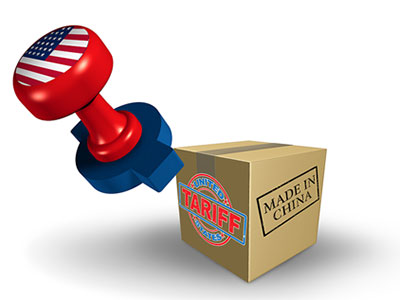
Tariffs are reshaping global trade and supply chains, creating both uncertainty and opportunity. As trade policies evolve, manufacturers and supply chain leaders must understand the potential impacts on costs, sourcing strategies, and competitiveness while building resilient plans for future growth.
Manufacturers are waking up to the risks in their end-to-end supply chains. They are realizing that they are only as strong as their weakest link, especially if they do not have backup sources of supply that will jump in at a moment's notice. As an international law expert says, if you are counting on China for manufacturing, you must "get out".
Risks abound in the global supply chain and goods movement systems. The only successful strategy to thrive is to create a resilient supply chain. According to the Global Port Tracker (GPT) report from Hackett Associates and the National Retail Federation (NRF), the specter of labor strife and new tariffs, along with strong sales, is driving U.S. retailers to keep imports surging through the spring.
Manufacturing in the U.S. is gaining momentum, and businesses that aren’t prepared will struggle to keep up. According to Lisa Anderson, MBA, CSCP, CLTD, President of LMA Consulting Group, Inc., the resurgence will be fast and powerful, with companies that are ready to scale reaping the greatest benefits.
"Trump is utilizing tariffs as a negotiating tool in support of his agenda. Although most of what is communicated as potential tariffs is unlikely to go into effect for extended periods of time, tariffs will be rolled out in the next few months." Lisa Anderson is quoted in this article from PYMNTS.
With new tariffs set to take effect, businesses are re-evaluating supply chain strategies to mitigate costs and risks. From reshoring to supplier diversification, companies are adapting to shifting trade policies while balancing efficiency and profitability. As tariffs reshape global sourcing, proactive executives are seizing opportunities to strengthen resilience and streamline operations.
Manufacturing is starting to take flight. The resurgence will be powerful and fast. As a well-connected business executive and trusted advisor mentioned recently, when manufacturing takes off, you will not be able to keep up if you aren't already on top of it.