Why Local Supply Chains Are the Future of Business
Having more diverse, shorter, less complex supply chains creates more resiliency.



Having more diverse, shorter, less complex supply chains creates more resiliency.
Critical minerals and rare earth elements have become strategic assets in the global competition for manufacturing, technology, energy, and national security leadership. From semiconductors and artificial intelligence to defense systems and advanced manufacturing, access to these resources is essential to economic growth and supply chain resilience. As geopolitical tensions [...]
Rare earth minerals are essential to modern technology, from EV batteries to aerospace components. In this Supply Chain Chat, Lisa Anderson dives into why these minerals are so critical, what industries rely on them, and what supply chains must do to secure a stable supply in an increasingly competitive global market.
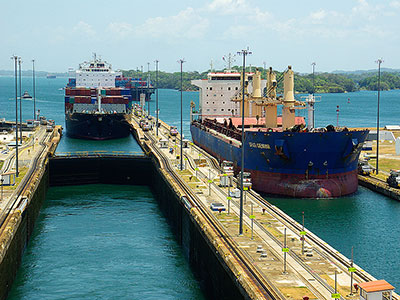
Geopolitics Dominate Supply Chain Discussions Almost every supply chain chokepoint has geopolitics dominating the discussion. From the Panama Canal to the Suez Canal to the South China Seas and Greenland, geopolitics and supply chains have circulated in the news. For companies to be successful navigating this VUCA (volatility, uncertainty, [...]
Is China still a viable place for manufacturing and business? In this episode of Supply Chain Chats, Lisa Anderson sits down with John Tulac, International Business Attorney, to discuss the realities of doing business in China.
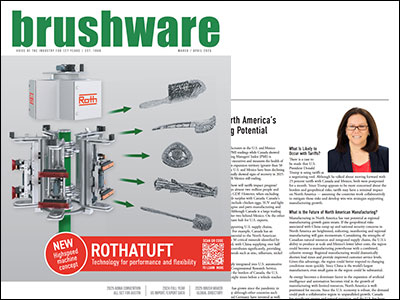
In the second half of 2024, manufacturers in the U.S. and Mexico were in contraction according to PMI readings while Canada showed continual expansion. The Purchasing Managers’ Index (PMI) is based on a survey of private sector executives and measures the health of the economy. Canada has scored in [...]
Natural resources aren’t just about availability—they’re about accessibility and investment.
"Canada and Mexico have integrated supply chains with the U.S. in the automobile and aerospace sectors," Lisa said. "Although I think there might be short term impacts, I don’t think there will be significant tariffs over the medium/long-term."
Tariffs are making headlines again—but what do they really mean for your supply chain? In this Supply Chain Byte, Lisa Anderson breaks down why tariffs exist, their impact on global trade and what businesses should be doing now to stay ahead. Whether you're managing sourcing, manufacturing or logistics, understanding tariffs is critical to maintaining a competitive edge.
In this Adhesives & Sealants Industry podcast interview, Lisa Anderson discusses supply chain risk, resilience, supplier collaboration, SIOP, technology, and the strategies manufacturers can use to navigate disruption and create a competitive advantage.