Businesses & Manufacturing Are On the Move
According to The California Policy Center, 237 companies have left California since 2005. Most companies cited the expanding regulatory and taxation environment.



According to The California Policy Center, 237 companies have left California since 2005. Most companies cited the expanding regulatory and taxation environment.
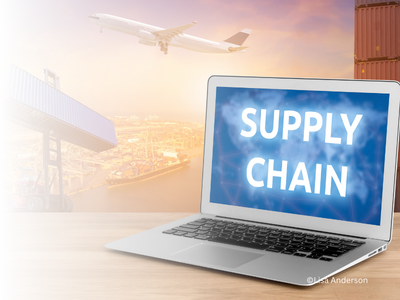
COVID-19 may no longer be a significant public health threat, but the global supply chain remains chock full of risk. The threats are seemingly everywhere these days: The Israel-Hamas war, which is sabotaging trade routes in the Red Sea; extreme drought, which is curtailing shipping in the Panama Canal, and China’s military aggression, which is threatening lawful commerce in the South China Sea.
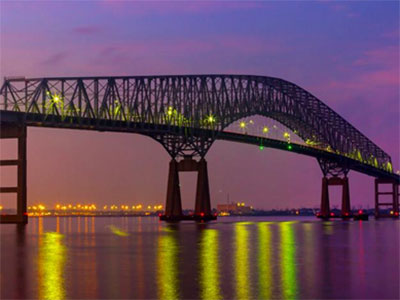
Lisa Anderson was quoted in Inc. on the effect on local business of the Francis Scott Key bridge collapse, and the ripple effect on the supply chain.
In this episode of Supply Chain Chats, Lisa Anderson talks about the state of affairs in the global supply chain. From the drought impacting container ship capacity in the Panama Canal to the Iran-backed Houthi rebels attacking container ships in the Suez Canal to the Chinese aggression towards Taiwan and ships passing in the South China Seas, risks are increasing across the global supply chain.
The collapse of Baltimore's Francis Scott Key Bridge highlighted how quickly a single infrastructure failure can disrupt regional and national supply chains. In this interview with PYMNTS, Lisa Anderson discusses the logistics implications of the bridge collapse, the ripple effects on ports, transportation networks, and distribution operations, and why [...]
The closure of the Port of Baltimore this week could have far-reaching implications all the way across the country for the ports of Los Angeles and Long Beach, according to several experts including Lisa Anderson of LMA Consulting Group.
The Francis Scott Key Bridge now lies partially submerged in the Patapsco River after a catastrophic cargo ship collision this week. Here’s how the Key Bridge collapse may affect the port’s operation.
Lisa Anderson emphasizes the profound and wide-ranging impacts on global supply chains. The bridge’s destruction not only disrupts local traffic and logistics but also sends shockwaves through international trade routes, highlighting the critical need for robust supply chain resilience strategies.
Horribly, a container ship collided with the Francis Scott Key Bridge, and much of the bridge collapsed. From a supply chain point of view, it has caused significant near-term impacts and extended disruptions in the region.
The Baltimore disaster is expected to further compound the stress already placed on the global freight system. “Container shipping traffic has already been quite disrupted, because of the drought going on in the Panama Canal–ships from there [are] going through the Suez Canal to come to the east coast of the U.S. from Northeast Asia,” says Lisa Anderson.