

Tariff Update
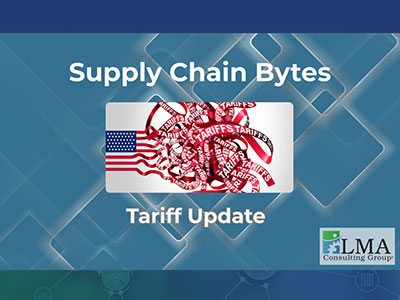
In this Supply Chain Byte, Lisa Anderson explains what the ruling means, provides historical context on tariffs and outlines what manufacturers should be thinking about now to protect profitability and remain competitive.
Tariffs continue to cause great stress in the financial markets and with certain industries. In fact, it divides manufacturers from distributors, logistics, and goods movement industries largely dependent on imports and trade.
In this Supply Chain Byte, Lisa Anderson explains how the Ports of Los Angeles and Long Beach broke volume records in 2025 while reducing dwell times from three days to two and a half. These improvements relate to strategic investments and collaborative partnerships in the supply chain.
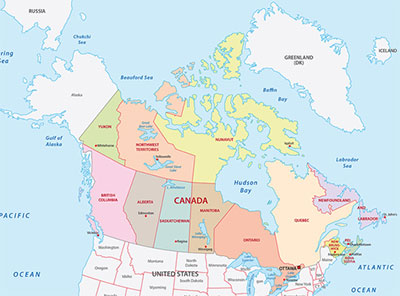
Greenland is a strategic focal point in global supply chains. In this Supply Chain Byte, Lisa Anderson discusses three reasons why Greenland matters to supply chains: shipping routes, defense and the Golden Dome and rare earth elements. We delve into what manufacturers should take away to succeed in this evolving environment.
The 'Trump Round' of trade negotiations has unleashed widespread disruption to global commerce, triggering a wholesale reorganization of supply chains and forcing countries to choose between capitulation and coordinated resistance.
Greenland has been in the news as Trump has insisted that the U.S. should own it, and Denmark is not willing to give it up. Regardless of how that debate works out, Greenland has been highlighted as strategic in the global supply chain, from a shipping route, defense, and rare earth elements standpoint.
2025 was another challenging year for manufacturing and supply chains. In this Supply Chain Byte, Lisa Anderson highlights the three primary drivers of 2025: geopolitics, manufacturing investment and AI with advanced technologies.
In this episode of Supply Chain Chats, Lisa Anderson, president of LMA Consulting Group, talks with Alan Dunn, President of GDI Consulting about the future of supply chains. They discuss how tariffs have and will reshape global manufacturing and become a catalyst for transformation.
Supply chains are plagued with geopolitical, cyber and supply chain risks. Companies have been focused on building resiliency and efficiency; however, as important as it is to be agile and profitable, it is no longer enough. Forward-looking companies are focusing on predictability, scalability, and customer value.
The One Big Beautiful Bill (OBBB) is now the law of the land. Among the provisions in this expansive legislation are incentives to encourage business investment. But, how will the bill affect our supply chains, and will it provide support to grow domestic manufacturing? Lisa Anderson joined the DC Velocity podcast to offer some insights.