

909.630.3943

supply continuity

Strategies to Move Supply Chains from Global to Local with Resiliency

Smart proactive companies are moving supply chains from global to local - or regional at a minimum. Yet the best companies are doing that while also focusing on resiliency. Our best clients are getting ahead of the pack with proactive strategies to move towards local with resiliency.

Medical Products Driving Manufacturing, Mining, and Construction

Medical products manufacturing is gaining momentum as companies want to build resilience to mitigate risk in the supply chain. Executives have realized that they must better control their end-to-end supply chain to ensure supply as geopolitical risks, vulnerabilities, and disruptions continue to arise while tariffs also push companies to build domestic capacity.

Geopolitics Impacting Supply Chain Networks

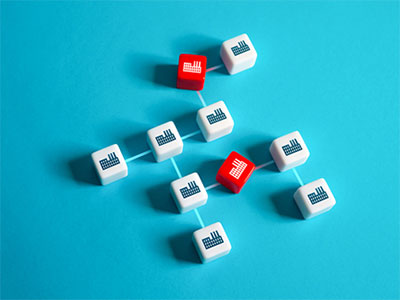
Geopolitics have been driving significant changes in supply chains. For example, stemming from the China threat, GM has just announced that it wants parts makers to pull supply chains from China. As supply chains evolve, it creates an expansive effect. As companies evaluate supply chain network changes, there are many items to take into account

Collaborative Supplier Agreements

In this Supply Chain Byte, Lisa Anderson highlights a recent breakthrough in manufacturing—and why collaborative supply agreements are important. When suppliers and manufacturers align goals, share information and commit together, progress moves from idea to impact.

Strategic Partnerships in the Medical Supply Chain

As geopolitical, tariff, and other supply chain risks are causing concerns with offshoring strategies and the global sourcing perspective, companies are reviewing domestic alternatives. Companies are moving towards domestic and regional supply chains and preparing to scale manufacturing and the extended supply chains.

Aluminum Disruption and the Supply Chain

Disruptions rarely stay contained and aluminum is a clear example. In this Supply Chain Byte, Lisa Anderson explains how challenges in one material can ripple through the entire end-to-end supply chain, affecting the largest of manufacturers.

Supply Chain Security & Resiliency

In today’s volatile world, manufacturers must ensure their supply chains are both secure and resilient. In this Supply Chain Byte, Lisa Anderson explains how it starts upstream with your suppliers—who are no longer just vendors, but partners in stability and success.

Only as Strong as Your Weakest Link in the Supply Chain: The Rare Earth Threat

Companies are only as strong as the weakest link in their supply chain. If you dig further into your supply chain, it is likely you will find dependencies on rare earth minerals. Read about strategies to scale rare earth production rapidly.

Rail Merger – Union Pacific & Norfolk Southern

The merger of Union Pacific & Norfolk Southern marks one of the biggest shifts in U.S. rail. In this Supply Chain Byte, Lisa Anderson explains how this deal could reshape freight movement, capacity and reliability across the country—and what it means for manufacturers and distributors relying on rail to keep supply chains running.

Cargo Spill – Managing Risk in the Supply Chain

A cargo spill can cause more than a mess — it can delay shipments, raise safety concerns and disrupt the supply chain. In this Supply Chain Byte, Lisa Anderson breaks down how to plan for the unexpected, coordinate with partners and adjust plans through SIOP to minimize disruption.

Go to Top