


Why Planning Is Impacted As Disruptions Abound
Disruptions have not stopped. China has been flying balloons over Taiwan. North Korea is threatening South Korea. Russia continues its war with Ukraine. Israel is at war with Hamas [...]
Talent is such a critical topic that we will keep our eyes and ears out for unique strategies and fresh ideas for success.
The best consulting clients are razor focused on supply chain volatility, risk and capacity. The recent events in the Red Sea highlight these critical priorities.
No client has enough high-skilled talent. In fact, it is the single largest issue facing executives. The skills gap is severe for high-skilled roles. Yet any company that wants to succeed is automating, digitizing, and utilizing advanced technologies such as robotics, additive manufacturing, and predictive analytics.
The White House has launched a cabinet-level supply chain council as the criticality of the topic rises to the top.
Simple metrics drive results. Whether a food and beverage manufacturer or an aerospace distributor, measuring the "right" metrics will focus attention on key issues and drive results.
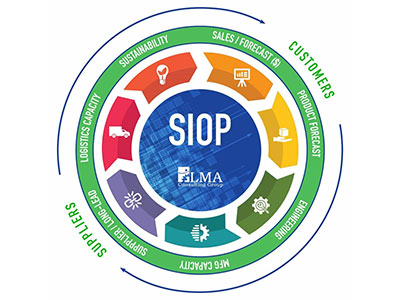
In the last month, clients have been proving the critical importance of SIOP (Sales Inventory Operations Planning), also known as S&OP or IBP (Integrated Business Planning) time and again.
Israel was attacked by Hamas, and the world has another war in another region of the world. Since the global supply chain is interconnected, in addition to the devastation in the region, supply chain impacts will emerge.
Manufacturing appears to be turning the corner. According to the ISM, the Purchasing Managers Index (PMI) recorded a contraction but at the slowest pace of the recent cycle. In fact, this is the third straight month of improvement.
Sustainability remains in the news; however, the technology doesn't always keep up. For example, Lego has abandoned its most high-profile effort to ditch oil-based plastics from its bricks after finding that its new material led to higher carbon emissions, according to the Financial Times.