

909.630.3943

Supply Chain Planning

Supply Chain Planning provides the integrated framework to align demand, supply, capacity, production, inventory, and distribution, enabling predictable revenue fulfillment, superior customer service, resilient operations, and profitable growth. Explore insights on SIOP (Sales Inventory Operations Planning), demand planning, capacity and resource planning, production and materials planning, inventory planning, and network strategy. Learn how manufacturers and distributors leverage integrated planning, technology enablement, data, and analytics to improve visibility, optimize working capital, resolve constraints, and execute with confidence.

Using SIOP to Navigate Global Disruptions

Global disruptions can quickly impact supply, costs, capacity, and customer service. By using SIOP to evaluate changing conditions, risks, inventory, capacity, and customer priorities, manufacturers can make proactive decisions, strengthen supply chain resilience, and position themselves to capture growth opportunities.
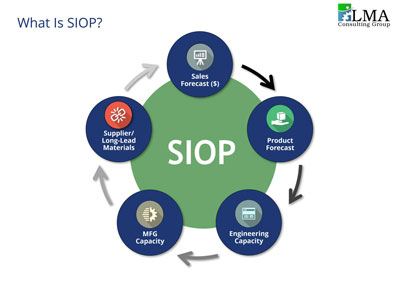
What Is S&OP (also known as SIOP) & Why Should We Care?

S&OP, also known as SIOP or Integrated Business Planning, connects strategy with execution by aligning demand, supply, inventory, capacity, and resources. A strong SIOP process helps companies improve collaboration, make better strategic decisions, and successfully navigate changing business conditions.

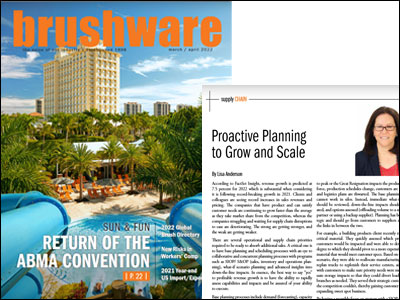
Proactive Planning to Grow & Scale

Rapid growth creates opportunities, but manufacturers need the capacity and planning capabilities to deliver. Strong demand, capacity, production, inventory, and materials planning — supported by SIOP and what-if scenario analysis — helps companies anticipate constraints, improve customer service, and scale profitably.

SIOP and S&OP FAQs: Implementation & Proven Results

SIOP aligns sales, operations, supply chain, and finance around one plan to improve revenue predictability, customer service, inventory, and profitability. This Q&A explores how manufacturers can use SIOP to anticipate capacity and resource needs, improve operational performance, and support profitable growth.

Interview with Industrial Insights on How SIOP Can Address Business Volatility

Supply chain disruptions and demand volatility make it increasingly difficult to balance customer needs with capacity, inventory, and profitability. In this Industrial Insights interview, Lisa Anderson discusses how SIOP helps companies anticipate changing demand, align supply, manage inventory and working capital, and make faster decisions in a volatile business environment.

Capacity Planning Best Practices to Support Sales Growth

Capacity planning ensures your operations and supply chain can keep pace with sales growth. Learn capacity planning best practices for aligning labor, equipment, suppliers, warehousing, and transportation with demand to identify bottlenecks, improve customer service, and support profitable, scalable growth.

Thriving in an Inflationary Environment Using SIOP/ S&OP

Inflation puts pressure on pricing, costs, margins, inventory, and working capital. Learn how manufacturers can use SIOP to evaluate customer and product profitability, model what-if scenarios, align capacity and inventory with demand, and make proactive decisions that support profitable growth.

Importance of External Relationships in the Supply Chain

Manufacturing and Supply Chain Expert Lisa Anderson, MBA, CSCP, CLTD, president of LMA Consulting Group Inc. joins a panel of supply chain experts from the Society for the Advancement of Consulting (SAC) Global Supply Chain Special Interest Group to discuss the importance of external relationships in the supply chain.

Improving Sales, Inventory & Operations Planning

In this Industrial Insights podcast interview, Lisa Anderson discusses Sales, Inventory & Operations Planning (SIOP), end-to-end supply chain management, demand planning, and the strategies manufacturers can use to improve service, profitability, and scalable growth.

Production Planning Best Practices to Recover Capacity

Every production planner has the challenging job of managing a complex set of conflicting priorities - meeting customer requested ship dates and new product trials, supporting manufacturing and logistics performance objectives, and addressing finance's objectives as it relates to inventory levels and cash flow.

Go to Top