Forecasting in Flux: Importance of Supply Chain Flexibility
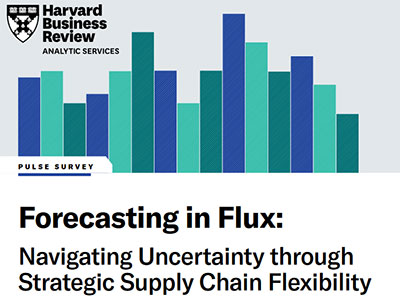
Lisa Anderson of LMA Consulting Group was quoted in a Harvard Business Review report about supply chain volatility and uncertainty that are part of the new normal.



Lisa Anderson of LMA Consulting Group was quoted in a Harvard Business Review report about supply chain volatility and uncertainty that are part of the new normal.
In this GS1 US Next Level Supply Chain podcast interview, Lisa Anderson discusses supply chain trends, technology innovation, data standardization, predictive analytics, and the strategies organizations can use to improve visibility, decision-making, and business performance.
Global supply chains are on the move. Executives have been hit with the harsh reality that the risk (supply chain, geopolitical, cyber, IP, etc.) is far higher than they realized when they outsourced with an eye to cost.
Lisa Anderson joined Food and Beverage Talk podcast to discuss supply chain challenges and opportunities in the food and beverage industry.
A lack of visibility, labor shortages, and surging shipping costs make navigating the supply chain feel impossible.
The awareness of the importance of international supply chains has grown in recent years, not just among the business fraternity, but more widely in the media, among politicians and ordinary citizens as well.
In the last month, there has been a flurry of ERP related discussions. A client went live on an aggressive timeline with an ERP system with little to no data migration as there simply wasn't time.
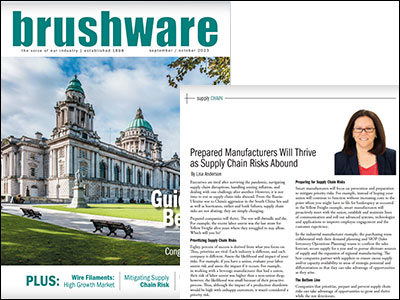
Executives are tired after surviving the pandemic, navigating supply chain disruptions, handling soaring inflation, and dealing with one challenge after another. However, it is not time to rest as supply chain risks abound.
Executives are struggling to keep up with inflationary raw material prices, elevated customer requirements, margin pressures, and the lack of people to fulfill key roles. Thus, they are looking to their ERP system and related supply chain technologies for answers.
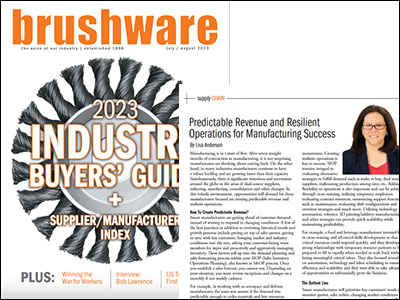
Manufacturing is in a state of flux. After seven straight months of contraction in manufacturing, it is not surprising manufacturers are thinking about cutting back. On the other hand, in many industries, manufacturers continue to have a robust backlog and are growing faster than their capacity.