


909.630.3943

Supply chain disruptions

Only as Strong as Your Weakest Link in the Supply Chain: The Rare Earth Threat

Companies are only as strong as the weakest link in their supply chain. If you dig further into your supply chain, it is likely you will find dependencies on rare earth minerals. Read about strategies to scale rare earth production rapidly.
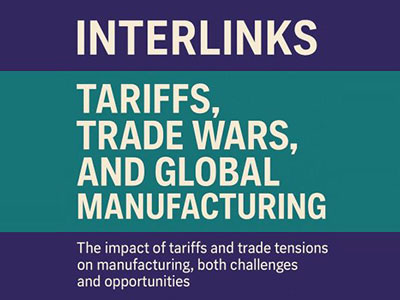
Tariffs, Trade Wars & the Tug of Global Supply Chains: Manufacturing in the Crosshairs

Listen to the discussion on what’s happening on the ground in American manufacturing, including tactical compliance moves, major capital investment announcements, and longer-term strategic shifts—or the lack thereof

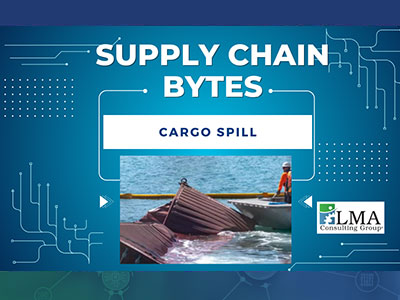
Cargo Spill – Managing Risk in the Supply Chain

A cargo spill can cause more than a mess — it can delay shipments, raise safety concerns and disrupt the supply chain. In this Supply Chain Byte, Lisa Anderson breaks down how to plan for the unexpected, coordinate with partners and adjust plans through SIOP to minimize disruption.

Tariffs & Turbulence: Strategies for Supply Chain Resilience

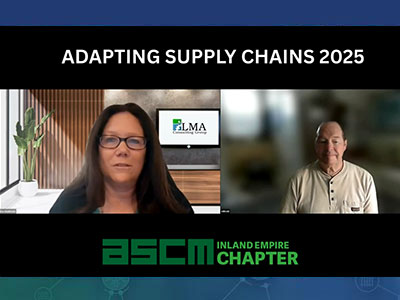
Global supply chains are being reshaped by shifting tariffs, trade regulations and geopolitical uncertainty. In this ASCM Inland Empire webinar, Lisa Anderson, President of ASCM-IE, and Ed Knab, international trade and customs expert, explore the ripple effects of tariffs on manufacturers and distributors—and the strategies companies can use to stay resilient.

Geopolitical Issues: Impacts on the Medtech Industry

Geopolitical risks and events happening around the globe can adversely impact medical device supply chains, creating delays, increasing costs, and causing other challenges for companies. Companies must pursue supply chain resiliency and additional strategies to succeed.

The Hidden Risk in Your Supply Chain

In this Supply Chain Byte, Lisa Anderson shares why cyber threats are becoming one of the biggest risks to manufacturing and distribution operations, and what leaders can do to stay ahead.

Transportation Opportunities

When disruptions hit, transportation often takes the blame. But now, it's also where opportunity hides. As transportation and trucking are expected to emerge from the freight recession, there is a short window of opportunity for companies to evaluate supply chain reconfigurations and develop transportation strategies.

Navigating Vulnerabilities and Tariff Impact with Supply Chain Resiliency

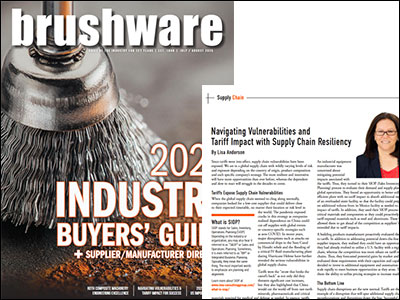
Since tariffs went into effect, supply chain vulnerabilities have been exposed. We are in a global supply chain with wildly varying levels of risk and exposure depending on the country of origin, product composition and each specific company's strategy.

Resiliency of Paramount Importance for Supply Chain Success

As geopolitical unrest, natural disasters, and shifting trade policies upend global logistics, resilient companies are transforming their supply chains to gain competitive advantage and ensure growth.

Planning Around Chokepoints

The Strait of Hormuz is a geopolitical chokepoint — and a critical reminder of why advanced supply chain planning is non-negotiable. In this Supply Chain Byte, Lisa Anderson highlights the ripple effects that disruptions in this narrow strait can cause and how strategic planning, risk assessment and scenario modeling help companies stay ahead.

Go to Top