

909.630.3943

Geopolitics, Trade & Supply Chains

Navigate geopolitical uncertainty, trade policy changes, and global supply chain disruption with strategies that strengthen resilience, protect profitability, and support predictable growth. Discover how Supply Chain Planning, Operational Performance & Transformation, and Supply Chain Technology & Enablement help manufacturers and distributors improve supply continuity, respond faster to change, and build more agile, competitive supply chains.

The Future of Critical Mineral Supply Chains

Lisa Anderson has been quoted by Edhat on the challenges facing U.S. defense supply chains as the country works to reduce dependence on China for critical minerals.


Critical Minerals for Defense Supply Chains

Critical minerals are becoming an even greater priority as the U.S. strengthens defense supply chains. New requirements emphasize multi-tier supplier visibility, supply continuity, capacity, and alternate sourcing to reduce risk and strengthen resilience.

Turning Product End-of-Life into a Competitive Advantage

Distributors have an opportunity to turn product end-of-life programs into a competitive advantage by supporting manufacturers with recycling and take-back initiatives. In Supply House Times, Lisa Anderson explains that the most successful programs balance excellent customer service with sound inventory and cost management.

Strait of Hormuz Crisis Exposes Hidden Food Supply Chain Risks

Lisa Anderson has been featured in an article examining how the Strait of Hormuz crisis is disrupting global food supply chains. She explains why businesses need to look beyond their direct suppliers, strengthen supply chain visibility and prepare for the cascading effects of global disruptions.

Tariffs and Trade: What Manufacturers Should Expect Next

Tariffs have become a long-term reality for manufacturers and supply chain leaders. This briefing recaps the key trade policy milestones, explains where U.S. tariffs stand today, examines the latest developments with China, and outlines practical strategies to reduce risk, improve resilience, and position for profitable growth.

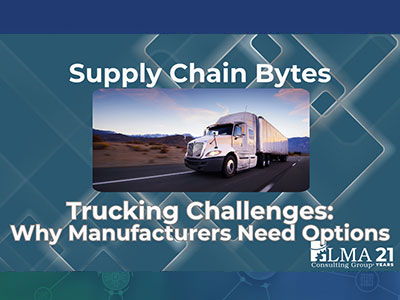
Trucking Challenges: Why Manufacturers Need Options

Freight rates are increasing as transportation capacity tightens. Lisa Anderson explains what's driving the changes and shares strategies manufacturers can use to build a more resilient, predictable, and profitable supply chain.

Micron’s Investment Highlights the Future of the Semiconductor Supply Chain

The U.S. semiconductor industry is rebuilding more than fabrication capacity. Learn why end-to-end supply chain resilience, strategic supplier partnerships, and SIOP are becoming competitive advantages as manufacturers strengthen networks to support AI growth and reduce supply chain risk.

Lisa Anderson Weighs In on Apple’s $30 Billion U.S. Manufacturing Strategy

Apple's latest U.S. manufacturing investment highlights a broader shift in supply chain strategy. Lisa Anderson explains why manufacturers are balancing resilience, risk, responsiveness, and profitability to build lasting competitive advantage in an increasingly uncertain global business environment.

An E.U. Supply Chain Perspective

Lisa Anderson and Patrick Daly discuss the U.S.–E.U. trade agreement, geopolitical risk, rightshoring, automation, and regional manufacturing strategies, offering practical insights into how global supply chains are evolving and what manufacturers and distributors should consider next.

Lisa Anderson Featured in The Press-Enterprise

Lisa Anderson, President of LMA Consulting Group, was featured in The Press-Enterprise discussing Inland Empire warehouse growth, automation, sustainability, and the critical role logistics plays in supporting Southern California's economy and supply chain competitiveness.

Go to Top