Supply Chain Resilience Has Risen to the Top with the White House Council
The White House has launched a cabinet-level supply chain council as the criticality of the topic rises to the top.



The White House has launched a cabinet-level supply chain council as the criticality of the topic rises to the top.
China is Israel’s number two trading partner, and so there will be a significant impact to that trading relationship during the war. There will be disruptions due to labor shortages as business workers are called up as army reservists, and as disruptions occur due to the war.
Lisa Anderson of LMA Consulting Group was quoted in a Harvard Business Review report about supply chain volatility and uncertainty that are part of the new normal.
Lisa Anderson of LMA Consulting Group was quoted on Bloomberg Law about risk to China-linked supply chains, especially geopolitical risk, prompting some companies to rethink where they source their materials or manufacture their products.
Companies went global for the past few decades with a gusto to save labor costs. The pandemic jolted many Executives eyes open to the risks in the global supply chain. Suddenly, companies were reevaluating their global footprint with an eye to cost, risk (supply chain, geopolitical, etc.), customer performance, etc.
Israel was attacked by Hamas, and the world has another war in another region of the world. Since the global supply chain is interconnected, in addition to the devastation in the region, supply chain impacts will emerge.
Inflation and disruption are increasing again. Wholesale inflation as measured by the producer price index increased by .5% since last month which was more than expected. Core inflation (excluding food and energy) went up by .3% which was also more than expected.
The Israel-Hammas conflict is a stark reminder that global supply chains can be disrupted by unforeseen political events. No matter the safeguards in place, events like this can be major disruptors. That is why organizations must cultivate options to mitigate risk and protect their bottom line
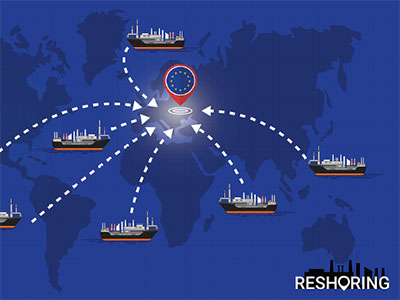
Global supply chains are on the move. Executives have been hit with the harsh reality that the risk (supply chain, geopolitical, cyber, IP, etc.) is far higher than they realized when they outsourced with an eye to cost.
Manufacturing appears to be turning the corner. According to the ISM, the Purchasing Managers Index (PMI) recorded a contraction but at the slowest pace of the recent cycle. In fact, this is the third straight month of improvement.