

909.630.3943

SIOP

Reshaping Supply Chains with Artificial Intelligence

Artificial intelligence and advanced semiconductors dominate investment and product cycles. Supply chains are not just evolving; proactive executives are reshaping supply chains with resilient, regional, and ready-to-scale strategies.

Sales Forecasting

In this Supply Chain Byte, Lisa Anderson explains why sales forecasting must start with customers. By talking directly with customers, reviewing their forecasts, evaluating quotes, watching trends and incorporating demand plans into their SIOP process, manufacturers can plan to support growth and reliably meet customer expectations.

Lisa Anderson Highlights Greenland’s Strategic Importance to Global Supply Chains

Lisa Anderson is drawing attention to the growing importance of Greenland and its role in safeguarding global supply chains in an increasingly volatile environment.

Weather Events Like the Winter Storm Highlight the Value of AI & Advanced Technologies

The storm that blanketed the U.S. had impacts that reverberated throughout the supply chain. Artificial intelligence and advanced technologies can refocus efforts from reactive to proactive and improve the outcome for people and mitigate further supply chain disruptions.

Productivity Key to Growth & Success

U.S. labor productivity soared at a 4.9% rate in the most recent quarter as compared to the typical annualized rate of 2% during the current business cycle. We are seeing productivity gains across the board as manufacturers utilize predictive processes such as SIOP and advanced technologies such as AI, robotics, and the automation of processes and better utilization of ERP.

Optimizing the Supply Chain for Demand and Supply Alignment

For companies to be profitable, demand and supply must be closely aligned. When they are not, inefficiencies, excess inventory, missed shipments and margin erosion follow. In this Supply Chain Byte, Lisa Anderson explains why aligning demand and supply is key to an efficient supply chain—and why the most effective way to achieve it is through a disciplined SIOP process.

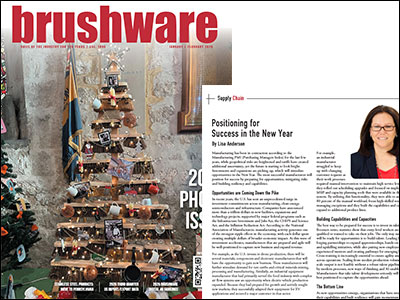
Positioning for Success in the New Year

Manufacturing has been in contraction for the last few years, while geopolitical risks are heightened and tariffs have created additional uncertainty, yet the future is starting to look bright. Investments and expansions are picking up. The most successful manufacturers will position for success by preparing for opportunities, mitigating risks and building resiliency and capabilities.

Highlights & Priorities for Success

Global supply chains started a full transformation in 2025 spurred on with geopolitical risk and encouraged by tariffs, and the pace accelerates as the New Year kicks off with geopolitics dominating the conversation and fundamentals making a comeback. We review learnings from the prior year and priorities for success in 2026.

Supply Chain Priorities for 2026

In this Supply Chain Byte, Lisa Anderson outlines three priorities for the year ahead. These priorities set the foundation for resilience, growth and sustained success in an increasingly complex environment.

Supply Chain Drivers of 2025

2025 was another challenging year for manufacturing and supply chains. In this Supply Chain Byte, Lisa Anderson highlights the three primary drivers of 2025: geopolitics, manufacturing investment and AI with advanced technologies.

Go to Top