

Deep Sea Mining
Deep sea mining is gaining momentum, and it could reshape supply chains. In this Supply Chain Byte, Lisa Anderson explains recent developments in deep sea mining and why they create new opportunities for manufacturers.
Hyperscale manufacturing is an emerging operating model that applies the speed, scalability, and modularity of tech companies to physical production. Hyperscale manufacturing has accelerated in importance as geopolitical risks, national security, and domestic requirements and capabilities have become of paramount importance.
Tariffs continue to cause great stress in the financial markets and with certain industries. In fact, it divides manufacturers from distributors, logistics, and goods movement industries largely dependent on imports and trade.
Companies are only as strong as the weakest link in their supply chain. If you dig further into your supply chain, it is likely you will find dependencies on rare earth minerals. Read about strategies to scale rare earth production rapidly.
In step change progress to depending on China (who has been unreliable in supplying critical minerals), a strategic partnership has been developed to replace this dependence for antibiotics. Not many companies can take over manufacturing of extended supply chains and scale up adequately. Thus, strategic partnerships can provide the resources and investments to scale and succeed.
As companies reconfigure supply chains and expand domestic manufacturing capabilities, it is an ideal opportunity to embrace technology and automation to help metal fabricators and machinists offset increased costs associated with tariffs.
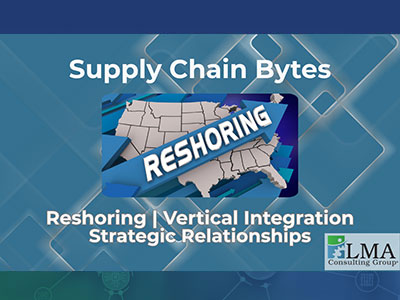
Strategic partnerships aren't just nice to have, they're essential for resilience. In this Supply Chain Byte, Lisa Anderson highlights how companies like MP Materials are reshaping the landscape by building strategic alliances that enable reshoring, support national interests and secure future growth.
From rising geopolitical tensions to escalating customer expectations, companies are reassessing what they control and what they should. Discover how vertical integration can help manufacturers strengthen resilience, improve visibility and gain a competitive edge.
In the latest evidence of the heightened concerns related to geopolitical risk, Biden has cracked down on most Chinese cars and trucks with a rule that software and hardware cannot come from China. There is concern about having millions of cars on the road with a potential threat to national security.
Lisa Anderson calls on manufacturers, distributors and supply chain leaders to take immediate action to restructure their supply chains as geopolitical tensions, tariff threats and global risks escalate.