Investing in Regional Supply Chains
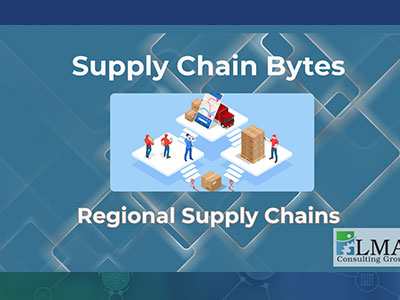
In this Supply Chain Byte, Lisa Anderson explores why regional supply chain alignment is the key to responsiveness, growth, and competitiveness.



In this Supply Chain Byte, Lisa Anderson explores why regional supply chain alignment is the key to responsiveness, growth, and competitiveness.
U.S. labor productivity soared at a 4.9% rate in the most recent quarter as compared to the typical annualized rate of 2% during the current business cycle. We are seeing productivity gains across the board as manufacturers utilize predictive processes such as SIOP and advanced technologies such as AI, robotics, and the automation of processes and better utilization of ERP.
Although it starts with a depressing state of affairs for manufacturers, there is vast opportunity on the horizon. Manufacturing investments have been pouring into the U.S. and the three pillars of economic success are trending positive. Companies must prepare to scale and for success.
In this episode of Supply Chain Chats, Lisa Anderson, president of LMA Consulting Group, talks with Alan Dunn, President of GDI Consulting about the future of supply chains. They discuss how tariffs have and will reshape global manufacturing and become a catalyst for transformation.
Geopolitics have been driving significant changes in supply chains. For example, stemming from the China threat, GM has just announced that it wants parts makers to pull supply chains from China. As supply chains evolve, it creates an expansive effect. As companies evaluate supply chain network changes, there are many items to take into account
Disruptions rarely stay contained and aluminum is a clear example. In this Supply Chain Byte, Lisa Anderson explains how challenges in one material can ripple through the entire end-to-end supply chain, affecting the largest of manufacturers.
LMA Consulting Group, Inc., a leader in manufacturing strategy and supply chain transformation, led by Lisa Anderson, MBA, CSCP, CLTD, joins the national spotlight for Manufacturing Month by highlighting the renewed strength and strategic importance of U.S. manufacturing.
The One Big Beautiful Bill (OBBB) is now the law of the land. Among the provisions in this expansive legislation are incentives to encourage business investment. But, how will the bill affect our supply chains, and will it provide support to grow domestic manufacturing? Lisa Anderson joined the DC Velocity podcast to offer some insights.
Check out Lisa Anderson's new ebook, AI & Advanced Technologies in Manufacturing, how manufacturers and distributors can harness AI and advanced technologies to drive business performance, customer value, and bottom-line results.
The economy has a distinct impact on manufacturing. Although U.S. manufacturing has gone sharply down with offshoring for lower wages, less regulations, and fewer hurdles, there remains a base crux of manufacturing might that is turning into a renaissance with favorable tax, tariff and interest rate policies.